
Prof. Sam Lehman-Wilzig: Gay Pride Month: Facing the “EneME”
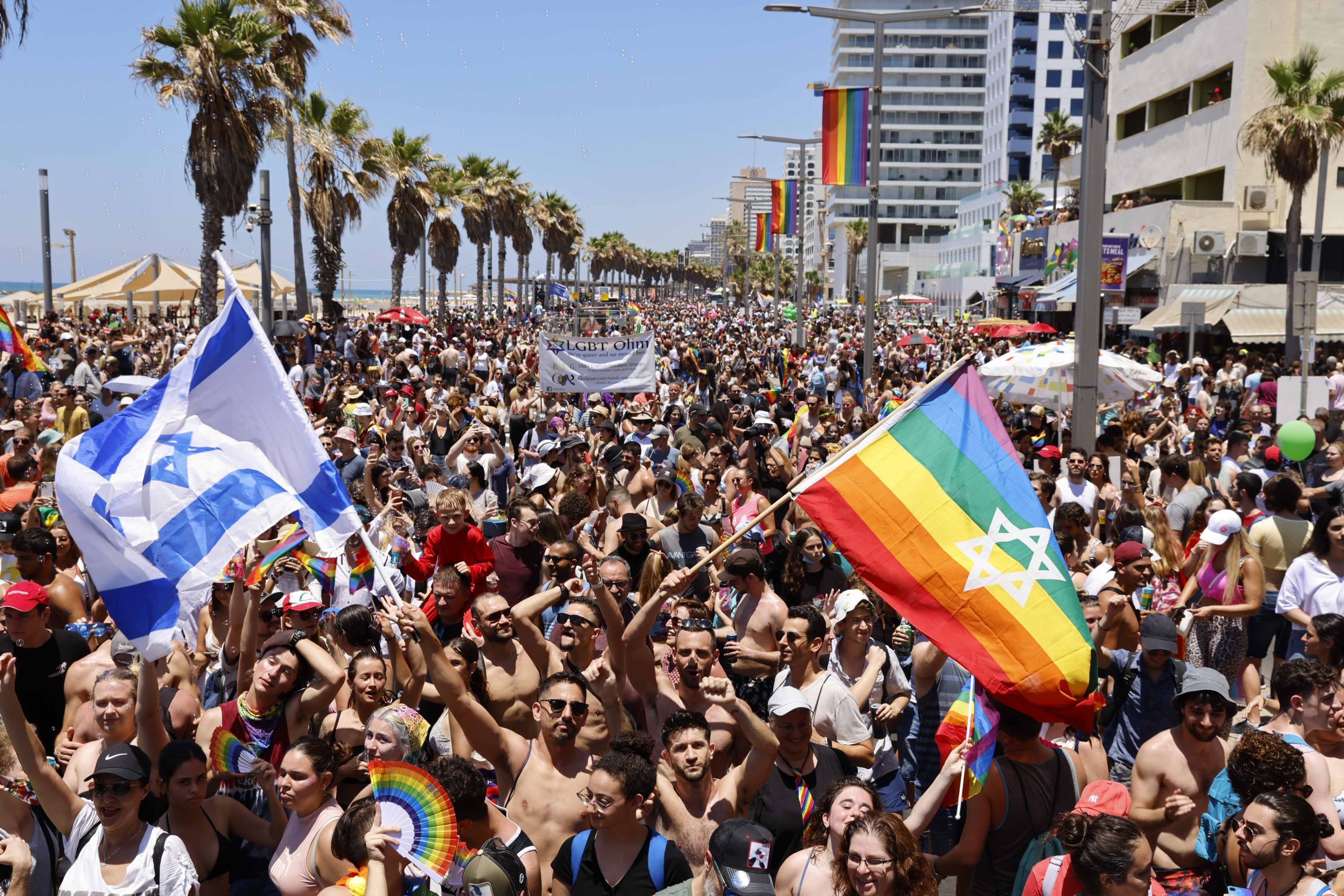
Today, Sunday (June 7), Israel starts its Gay Pride Month celebrations with Tel Aviv’s largest Gay Pride parade in the Middle East taking place next Friday. June 12 (Jerusalem had its parade this past Friday). Whether or not we agree with homosexuality, there’s a wider lesson here for all of us. Here’s my own story (to be clear: I am not gay).
In my early 20’s, I met a young woman (for the sake of her privacy, I’ll call her Toni) in summer camp. She was nothing like most girls/women I had ever met; Toni was very serious about religion and other social issues. We discussed many things, among them the issue of “feminism” – for me, something completely alien, as I was a product of Jewish Orthodox education all the way through high school. After a month, she told me her not so secret “secret”: she was a lesbian.
Almost everyone spends all their youth growing up in much the same social milieu, even if they move once or twice to a different city. That provides comfort, for we quickly learn who’s who, how to behave, what is expected of us, and most of all: what’s considered “normal.” The downside, of course, is that this is a social bubble; we don’t have much of an idea regarding how other social groups and certainly different cultural enclaves live their lives, and what they consider to be important or “acceptable.”
This is especially true and problematic for citizens of large countries and/or countries that are mostly separated territorially from the rest of the world. Those two elements characterize Americans more than any other significant nation on the planet. If you’ve never seen Saul Steinberg’s famous New Yorker cartoon cover; look it up: it’s even got its own Wikipedia page! https://en.wikipedia.org/wiki/View_of_the_World_from_9th_Avenue
Israelis, on the other hand, are quite aware of global “multiculturalism.” There’s hardly an Israeli who hasn’t flown overseas – usually several times over to such “exotica” as Thailand, Croatia, Japan, China, Argentina, New Zealand etc.
The same phenomenon is true not only for countries, but also for very cohesive social groups (religious, ethnic, and so on) – Orthodox Jews among them. This is not necessarily negative; such cultural self-ghettoization has enabled the Jewish People to survive longer than any other ethno-national culture on the face of the Earth (Chinese culture as we understand it today goes back “only” 2500 years to Confucius). But it does leave the average individual within that cultural enclave quite clueless about other ways of life. Like I was.
That summer camp was Ramah – from the Conservative Movement. Frankly, there isn’t much of a cultural gap between modern Orthodoxy and Conservative Judaism. Indeed, we’ve been here before: modern Orthodoxy is today’s Beit Shammai (very strict in its interpretation of the law) and the Conservative approach to halakha [Jewish law] is Beit Hillel (far more lenient and flexible). Interestingly – something that many Orthodox today have forgotten – the final law decision was almost always according to Beit Hillel!
Back to “Toni”: the two of us had a religio-cultural “oil and water” interaction. My first shock: she wore a kippah (skullcap) all the time – something that back in the 1970s was unheard of (at least for me). The second shock: she put on tefillin (phylacteries) every morning! Ensuing conversations were certainly eye-opening. In a word – which I had read about and only understood in very general terms – “feminism.” In fact, for the “norms” of that age ancient Jewish law actually treated women quite well. Judaism has always placed social justice at a high normative level – not to mention the occasional female leader of the Israelites (e.g., Devorah).
For me, the experience was an “education” in the wider sense of the term. The main lesson: keep one’s eyes and ears open for other ways of thinking and living. Of course, this does not mean that one must (or should) accept and adopt those dissimilar perspectives.
What’s the value, then, of opening up to other ways of life? First, additive: we can learn about new things. Second, refractive: it’s a mirror to our own way of doing things i.e., forcing us to consider whether everything we’re used to doing makes sense. And third, it improves our social intelligence – better understanding and tolerance of “strange” things that others might be saying/doing.
For example, various cultures have different conceptions of “social distance”: Latins (southern Europe and South America) tend to stand very close to each other when conversing, touching each other all the time; conversely, Anglos keep a significant distance. When the two get together without understanding the other’s cultural norm, Latins consider Anglos to be weak and off-putting for “staying apart,” whereas from the reverse perspective, Anglos consider Latinos to be “pushy” and aggressive because they’re constantly “invading my space.”
But why the word “enemy” in the title of this essay? Because in Orthodox circles, anyone of another Jewish “sect” was (and certainly in Israel, still is) considered to be a dangerous “enemy” – the Conservative movement perhaps even more so than Reform Judaism, precisely because the former adheres to the same general basis: halakha. In any case, meeting such an “enemy” in Toni, not only showed me how absurd such theological demonization can be, but also constituted a life lesson in listening to different ideas, opinions and practices – even if ultimately one does not necessarily accept all (or parts) of that way of living.
This is especially relevant to Israeli society. Despite its openness to other cultures around the world, we Israelis have become highly intolerant of the “other” in our midst. More “social conversation” and less “political demonization” is certainly the order of the day.
The bottom line: in life, when we come across a person who is “strange” or even seemingly “threatening” (our values, not physically) – what sociologists call the “Other” – we should stop and think. Perhaps what we need to face is ourselves: the eneME?