
Steve Kramer – Zionism in the Diaspora
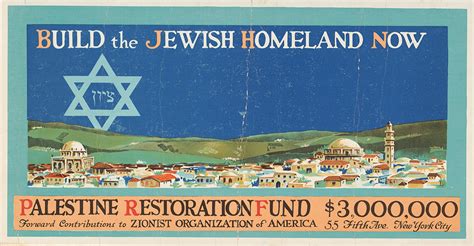
An accepted definition of ZIONISM is the national movement for the return of the Jewish people to their homeland and the resumption of Jewish sovereignty in the Land of Israel. That said, if you believe in Zionism, you don’t have to move to Israel. In fact, an old joke about Zionism is that it is a movement for people who donate to Israel so that someone else’s children can move there.
My introduction to Zionism occurred when I was a preteen, a graduate of Sunday school sessions and a participant in two afternoon classes per week in Hebrew school at our Conservative synagogue. It was the year of my bar mitzvah, 1958, and a blockbuster book about Israel was being read by everyone, at least in our house. I read “Exodus” by Leon Uris, backwards and then forwards. Previously, Israel had been a vague presence in my childhood universe. Afterwards, it became a real place, but one located far away. I sometimes wondered why my grandfather had not gone to Palestine instead of the US. (Only 1-2% emigrated to Palestine.)
That same year my grandparents returned from an “around the world” cruise on the US United States, bringing me a tallis (tallit) and yarmulke (kippah) from Israel. Several years later my parents visited Israel as well and brought home a Hanukkah menorah in the then-current Israeli turquoise style, unlike the silver menorah which my family still uses today. Still, at that time, Israel was just a somewhat romantic place far away, not really attached to me.
My father was an officer in the B’nai B’rith organization, a staunch defender of the State of Israel. Its mission is to advocate for global Jewry with a concentration on advocating for human rights. My father was often busy in the evening with duties for the voluntary Jewish organization.
My parents were active in our synagogue and its sisterhood. My brother and I spent many summers in the Pocono Mountains at a Jewish-owned camp, where there was a Friday night service and non-kosher food wasn’t served.
At my high school in Atlantic City, I was a member of one of several Jewish fraternities, and there were an equal number of Jewish sororities. At my all-male college, I was a member of one of the Jewish fraternities. During those years I attended services for the “High Holy Days”, back home, but not much else. There was no Hillel organization on the campus, nor was there any Chabad representation at that time.
I finished college in 1967, skipped my graduation to my parents’ chagrin, and did the “summer in Europe” thing. In June, while I was in Paris, the Six-Day War occurred. I quickly added Israel to my itinerary – which I hadn’t even thought of before – and spent a week in Jerusalem in August. There were so few hotels and so many tourists right after the war that I ended up staying at the Ramat Rahel kibbutz, located on the outskirts of the city.
To pay for my room and board, I spent most of the time working on the kibbutz except two days off. Those days I spent touring in Jerusalem: the recently-opened Israel Museum, the city center, the Old City with the Western Wall and the Temple Mount, the Al Aksa Mosque and the Dome of the Rock – everything was open for tourists like myself. But, at that time, I still had no inkling that my future life would be in Israel.
Returning home after my summer vacation, I then attended law school for a term and a half, worked in New York for a half year, and then decamped to the West Coast for my several-year sojourn in the counter-culture: hippiedom. I was still a proud Jew, but it was not at the forefront of my thoughts. I never thought of moving to Israel as a possibility.
Years later, in 1980, I married my wife Michal Langweiler, who had a Reform background in the Atlantic City area. By this time, I was busy with a career in the family business, and Michal was in the process of selling her family’s business when our second son was born.
We were members of Michal’s Reform congregation. When our first-born was a toddler, we participated in the Temple’s trip to Israel.
Michal, upon arriving in the “Promised Land”, had a revelation that she would live in Israel. She didn’t tell me that, but after my trip to Israel we both were struck by life there and decided that we would learn all we could about Israel and perhaps would move there later on. We read all the books in the Margate, NJ library concerning Israel. I concentrated on the history of the state and Michal added a large religious component to her book selections.
Eight years later, things had changed dramatically. Michal had sold the business, and my brother had bought me out of my share of the family business. We had the opportunity to move anywhere if we wished; Israel was that “anywhere”. We spent three weeks there, separately, getting the lay of the land. When I arrived for my trip, I too knew that I would live in Israel. In the summer of 1991, we sold our house and car and made Aliyah with our two young sons.
Our sons struggled at first in school, but by the following September they were acclimated and had many friends. They were speaking Hebrew ok by then; Michal and I still speak only simple Hebrew, but English is quite common.
We moved from our 1st-year rental in Ra’anana and bought a house in Alfe Menashe, just over the Green Line, the informal border separating Israel from Judea and Samaria – the Jewish homeland. Michal worked as a private English teacher. I had half my working career in Israel, and worked in three different positions, retiring at age 62.
After twenty-five years in Alfe Menashe, we moved to the nearby, lovely city of Kfar Saba. Our sons had returned to the US several years after finishing their IDF service and the customary trip(s) exploring the world.
We’ve downsized to a great apartment and are living “happily ever after”. We are members of a very friendly Conservative (Masorti) congregation – started by English-speakers – close to our home. We travel in the region, and we visit the US every year or two, but we still prefer living in Israel, where we are the majority population and enjoy the Israeli lifestyle. We’ve never regretted our move here despite some setbacks, but setbacks can occur wherever one lives.
So, we are Zionists. But even if you live in the Diaspora, being a Zionist is still possible. It means that your viewpoint towards Israel is personal and very meaningful. It is probably secondary to your American citizenship, but it might not be…. After all, the future of the Jewish people centers on Israel, and your children or grandchildren may move to Israel.
With the rapid rise of Jew-hatred throughout Western countries, including the US and Canada, more people may consider making Aliyah. It’s workable for young people who are starting out in life, for older people who want a fresh start, or for retired people who are free to move anywhere. Who knows, you may make Aliyah to live near your children or grandchildren, who moved because they wanted to be Jews living in the Land of Israel.
You don’t have to be an Israeli to be a Zionist. You just have to make Israel part of your essence, whether you live in New York, Florida, or anywhere else.