
Prof. Sam Lehman-Wilzig – The Thrust of Social Media: Mistrust
Social media have effects well beyond politics. After all, they’re called “social” media for a reason, so their societal effects are easily as important and problematic.
The news from around the world shows a growing trend regarding social media: get it out of the hands of our youth! Australia has already passed a law banning social media from anyone under 16 and other countries – for instance, Germany and Spain – are considering similar legislation.
However, if such laws relate to the micro-situation of each young person’s mental health, could it be that for adults the problem is macro-national health? To put it simply and bluntly, as a general rule do social media harm democracy? My answer is an unequivocal “yes” because social media undermine trust in the rulers, the bureaucracy, and even in their fellow citizens – in at least three central ways:
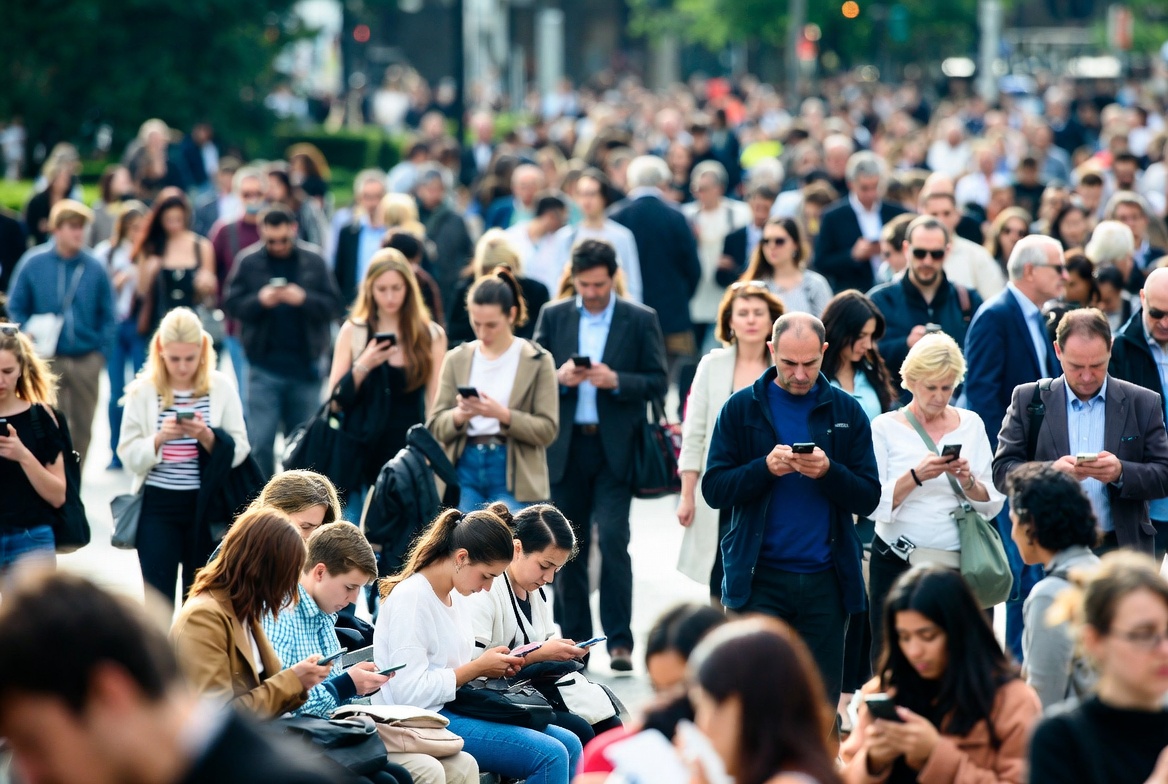
First, social media personalize the information each of us receives based on algorithms whose main purpose is to keep us “engaged.” The best way to do that is to continually feed each of us with “information” that we find attractive, either informatively or emotionally. The result is that many citizens in the same country end up inhabiting non‑overlapping political realities. One country with its population living in (at least) two different mental territories.
Second, social media algorithms will give higher priority to political scandals, government failures, and national threats because these play better into our emotional, negative, and identity‑affirming preferences. Our perception of the world, therefore, turns increasingly negative.
Third, and connected to these two elements: whereas in the previous “traditional media” era (print newspapers, a single TV channel, a few local radio stations), journalism was mostly run and produced by professionals with relatively high ethical values, the contemporary, public-created content on social media has no such tendencies. The result: blurring the boundaries between professional journalism, activists, political parties, influencers, anonymous accounts, and even foreign disruptors – making it very hard to assess the credibility of the news, not to mention removing any possibility of personal accountability by misinformers.
The not very surprising outcome? Data from 46 countries between 2015 and 2023 show trust in the news generally declining, especially among younger and more digitally addicted users. People who primarily use social platforms have been found to be more likely to distrust traditional news organizations that in the past functioned as relatively trustworthy mediators between citizens and political institutions. This leads to a double negative effect: not only does trust in those media(ting) organizations erode but such mistrust also gets redirected toward the political system itself.
Consider this: in the United States, from President Eisenhower (January 1953) all the way through George W. Bush’s presidency (ending in early 2009), the average presidential job approval was 55% (Gallup); since then – precisely when social media began to make inroads – the next three presidents’ (Obama, Trump, Biden) average approval rating had sunk to 44%. (Similar types of decline were registered regarding other national institutions.)
To be sure, correlation is not causality: just because they are connected, that doesn’t prove that one led to the other. However, social media’s rise is clearly correlated with decreasing trust in traditional media, political leaders, and other major public bodies serving the public. That constitutes strong evidence that indeed social media are the “culprit” here – especially when it’s clear why that should be (the three factors noted above).
The major question is what to do about this. After all, free speech is a core value that democratic countries are loathe to undermine. On the other hand, one can make the argument that to a certain extent social media tend to undermine free speech! If algorithms don’t offer a level playing field for certain ideas, if citizens find it difficult to obtain a wide-ranging set of opinions (on social media) because algorithms “feed” them the same diet of news, and if social media encourage (or at least do not try to filter out) fabrications and disinformation, then one can argue persuasively that they should be regulated.
Indeed, that’s exactly what’s happening in the European Union and in the U.S. Congress, both debating and considering legislation for some type of regulatory apparatus regarding social media. This is not unheard of: over-the-air television and radio have been regulated for decades, Israel being among such countries.
Another approach is “bottom-up,” i.e., individuals taking their social media destiny into their own hands. For instance, take the increasingly popular trend of “bricking.” The “Brick” is a small, grey cube (around $60; the size of an AirPods case), through which users reduce screen time (the company claims three hours a day on average, at present) by choosing the apps they would like to disable and then kissing the phone to the “brick,” which blocks that app from appearing on the phone. One can reverse the process by “unbricking” – the same procedure backwards. About 170,000 Brick app downloads have already been registered.
Other examples: 19 European cities host an “Offline Club” – face-to-face social groups that forbid the use of phones while meeting; “digital detox” retreats (there are even “Internet and Technology Addicts Anonymous” groups!); “unplugged” restaurants and cocktail bars forbidding phone use on their premises; etc.
An even greater threat to unfettered social media manipulation are court cases (https://socialmediavictims.org/social-media-lawsuits/). Thousands of “social media addiction” lawsuits have been filed against major platforms – TikTok, YouTube, Facebook, Instagram, and Snapchat – contending that these companies didn’t issue warnings that their platforms were designed to be intentionally addictive to children and teens. Should these lawsuits succeed (Facebook’s trial has already started), one can envision the next step: similar court cases regarding how social media harms adults too.
These cases might not prove victorious in court – judges could agree about the “harm” argument but loathe to limit free speech – their very widespread coverage should educate the general public about the damage social media are doing to individuals and to society in general. One can be sure that the traditional media (whether print or digital) will work overtime in bringing that message home. But as in other cases of “addiction withdrawal,” it will be a long-term struggle to return society and democracy to relatively civil debates based mostly on truthful news.