
CTECH – Latest Israeli Innovation & Tech News Sept 2026
“We proved there are no sacred cows in technology”: Island founder says the company can be worth tens of billions. Island co-founder Dan Amiga says the cybersecurity company has reached $200 million in revenue and is growing 100% annually, with eight of the world’s 10 largest banks using its enterprise browser. Read more
Kiteworks acquires Israeli startup Bonfy.AI in deal estimated at tens of millions of dollars. Bonfy’s technology will be integrated into Kiteworks’ platform to classify and control sensitive data in real time, including information handled by AI agents. Read more
Mapping the leading Israeli talent shaping the next era of AI. From world-leading researchers in computer vision and AI security to a new generation of talent-dense “neolabs,” Israeli researchers and founders are moving deeper into the AI frontier. The TLV AI 50 maps the people pushing that shift across academia, startups and the world’s leading AI labs. Read more
Elbit restructures its U.S. business as American defense demand accelerates. The Israeli defense group is placing its 3,300-worker American operation under Twenty-Six Defense as its U.S. business expands. The move follows more than $370 million in recent contracts from Customs and Border Protection and comes as Elbit seeks to expand manufacturing capacity to meet a record $32 billion backlog. Read more
The renewable energy entrepreneur now betting on gas, AI and nuclear power. Ofer Yannay built Nofar around solar and energy storage but is now expanding into traditional energy as artificial intelligence drives demand for reliable electricity. He says Nofar will remain predominantly renewable while building a separate AI-focused energy business. Read more
Oligo: “AI is having its American Fuzzy Lop moment.” Uri Katz, Director of Research at Oligo Security, explains why the most critical bugs only turn up when humans step into the loop as part of CTech’s Security Researchers series. Read more

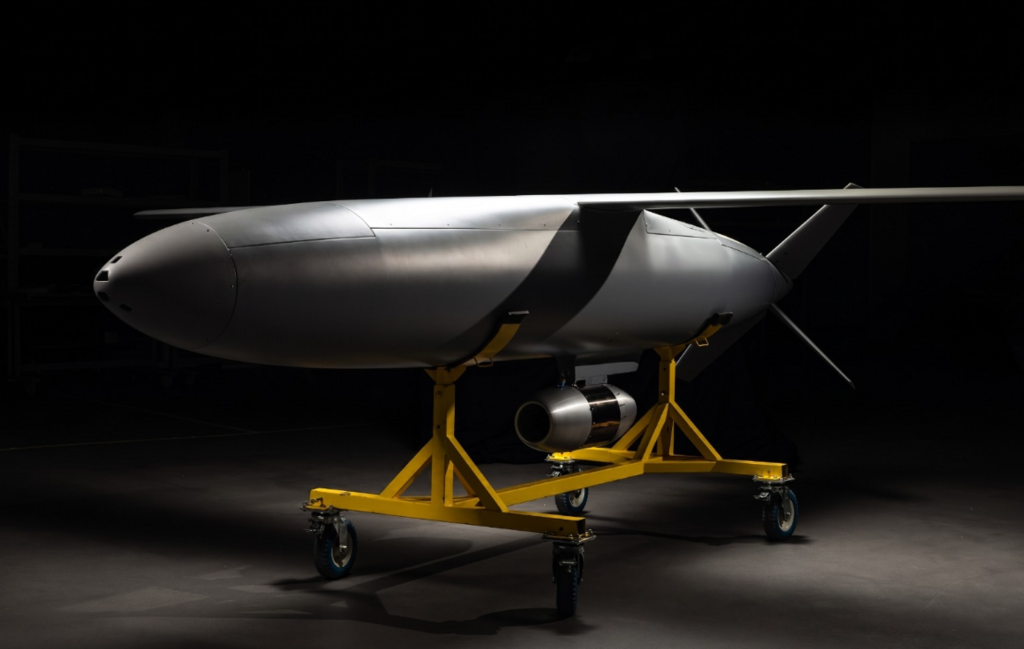
Secretive defense startup Covenant emerges from stealth with $250 million at over $1 billion valuation. The startup, founded in 2024, has spent two years operating in near-total secrecy as it develops Anthem, a long-range heavy-payload weapon designed to be produced at a fraction of the cost of comparable legacy systems, with serial production expected to begin in 2027. Read more
Cymphony raises $25 million Series A to secure the growing overlap between employees and AI agents. The Israeli cybersecurity startup has raised $30 million to date as it builds a platform that maps identities, permissions, information and behavior in a single graph. Read more
Wiz, Cyera and Eon founders back Israeli AI startup Euno in $23 million round. Euno is building a platform designed to give AI agents the organizational knowledge they need to work reliably inside large companies. The Series A, led by N47, will fund expansion in sales, marketing and AI research as the startup targets Fortune 500 customers. Read more
Wint raises $36 million Series D to use AI to detect water risks before they become costly damage. The Israeli company’s technology analyzes water use in buildings in real time, helping identify leaks, waste and potential problems before they cause damage. Wint says its platform saved 1.15 billion gallons of water and helped prevent an estimated $100 million in damage in 2025. Read more
Elbit unveils FUSE to coordinate swarms of autonomous systems on the battlefield. The new operation brings together AI, drones and unmanned ground vehicles under a system designed to coordinate large numbers of platforms in real time, including in GPS-denied environments. The company says its systems are already deployed with customers in Israel, the U.S. and Europe. Read more
Noma: “The research surface is expanding faster than researchers can cover it.” Sasi Levi, Security Research Lead at Noma Security, discusses why great researchers create new problem spaces rather than hunting for individual bugs as part of CTech’s Security Researchers series. Read more

What made Anthropic walk away from the $6 billion Decart deal? The Israeli AI startup was deep into due diligence with Anthropic when the $6 billion-$7 billion acquisition suddenly collapsed, raising questions about its technology, scalability and business strategy. The fallout could also complicate Decart’s search for another buyer and deal a blow to Israel’s ambitions to establish itself as a global AI powerhouse. Read more
Anthropic drops plans to acquire Israeli AI startup Decart. The companies had discussed a transaction worth roughly $6 billion, but the Claude maker ultimately decided against buying the company after reviewing its business and technology. Read more
Palo Alto Networks founder Nir Zuk raises $245 million for new cybersecurity startup. Cylake has now raised $290 million less than a year after its founding, including a $45 million Seed round in March. The company is developing an AI-native security platform for highly regulated organizations that need to keep control of their data and infrastructure. Read more
IDF to create new branch for AI and autonomous warfare. The new organization will develop robotic capabilities across land, air and maritime domains, including systems able to operate without human combat teams. It is the latest step in Israel’s broader push to integrate artificial intelligence and autonomy into its military. Read more
“Staying current is most of the job, along with understanding how the AI models actually reason.” Guy Stern, Global CISO at Alice, joined CTech to share his thoughts on agentic AI security, and why he sees AI’s real value as amplifying human judgment, not replacing it. Read more
Hapag-Lloyd and FIMI are willing to bend. Will it be enough to save the $4.2 billion Zim deal? After marathon talks with Israeli officials, the buyers have agreed to major changes to the proposed transaction, including tighter restrictions on foreign ownership. But the state is demanding broader access to shipping routes, separate information systems and greater control over Zim Israel. Read more

“The hardest thing for a male-dominated startup is bringing in the first woman.” The barriers facing women entering Startup Nation’s cyber sector aren’t about a lack of willingness to hire them. All the more so in the AI era, closing that gap is essential to defending the entire attack surface. Initiatives like Hackeriot are part of a broader effort to challenge Israel’s traditional military-to-tech pathways into cyber. Read more
Israel’s AI industry captures 89% of high-tech investment as funding surges to $11.8 billion. Nearly 3,000 AI companies are now operating in Israel, with late-stage funding accounting for more than half of the capital raised in 2025, according to a new report. Read more
Cyberstarts is looking for another Tel Aviv tower to house its growing startup empire. After leasing 15 floors at Landmark B for a shared campus for its portfolio companies, the $1.4 billion cybersecurity fund is now exploring options for a second location. Read more
Rafael signs deal to turn Volkswagen plant into defense hub. Rafael, Lower Saxony and investment fund Aurelius signed a declaration of intent to transform Volkswagen’s Osnabrück site into a center for security and defense technologies. The first phase will focus on developing and producing air-defense components, potentially including systems linked to Rafael’s Iron Dome, with detailed negotiations and regulatory approvals still to come. Read more
Nvidia’s Israeli networking business is booming, and so is its economic footprint. The company’s networking revenue reached $32.3 billion in just the first half of fiscal 2027, already surpassing the previous full-year total. Much of the technology behind the business traces back to Mellanox and Nvidia’s Israeli development centers. Read more
Hapag-Lloyd and FIMI to submit improved bid for Zim. The German shipping company and Israeli private equity fund have been given 30 days to make structural changes to their acquisition of Zim. The proposed revisions include tighter restrictions on foreign ownership, greater government control over Zim Israel and expanded maritime capacity. Read more

Wonderful is growing like Wiz, but its business is very different. The Israeli AI startup has reached a $5 billion valuation and a $70 million revenue run rate in less than two years, but its economics look far less like those of a traditional software company. Read more
Nvidia is no longer just an AI chip company. It is financing the revolution it built. Nvidia has expanded from GPUs into networking, software, computing systems and strategic investments in AI companies, while helping finance the infrastructure that buys its products. With revenue expected to approach $400 billion this year, investors are asking how long the extraordinary growth can continue. Read more
U.S. airlines return to Israel as foreign carriers rebuild flight capacity. Delta and United are resuming New York-area routes this week, while Wizz Air and Transavia are adding European flights ahead of the Tishrei holidays after months of disruption. Read more
Israel’s academic isolation is becoming harder to ignore. The country’s share of Europe’s prestigious research grants has fallen sharply, while reported cases of foreign researchers refusing collaborations with Israeli institutions have increased. Academic leaders warn that the consequences could extend well beyond funding. Read more
Zafran: “AI is the biggest force multiplier security researchers have ever had.” Amir Shavitt, Head of Research at Zafran, explains how the balance of power between attackers and defenders is changing as part of CTech’s Security Researchers series. Read more
WhatsApp faces class action in Israel over wave of account blocks. Israeli users and businesses accuse the messaging giant of repeatedly suspending accounts without adequate explanations or an effective appeals process. The lawsuit, filed in the Lod District Court, is seeking more than NIS 2.5 million and detailed data on account suspensions in Israel. Read more