
Prof. Sam Lehman-Wilzig – “Torah” Study? Not What (or Who) You Think
The cycle of Torah reading ends and begins today, Simkhat Torah (in Israel it occurred yesterday). But what exactly is meant by “Torah”? That depends on who you ask. And the (quite surprising) answer is strangely ironic – with profound implications for Israeli politics and society.
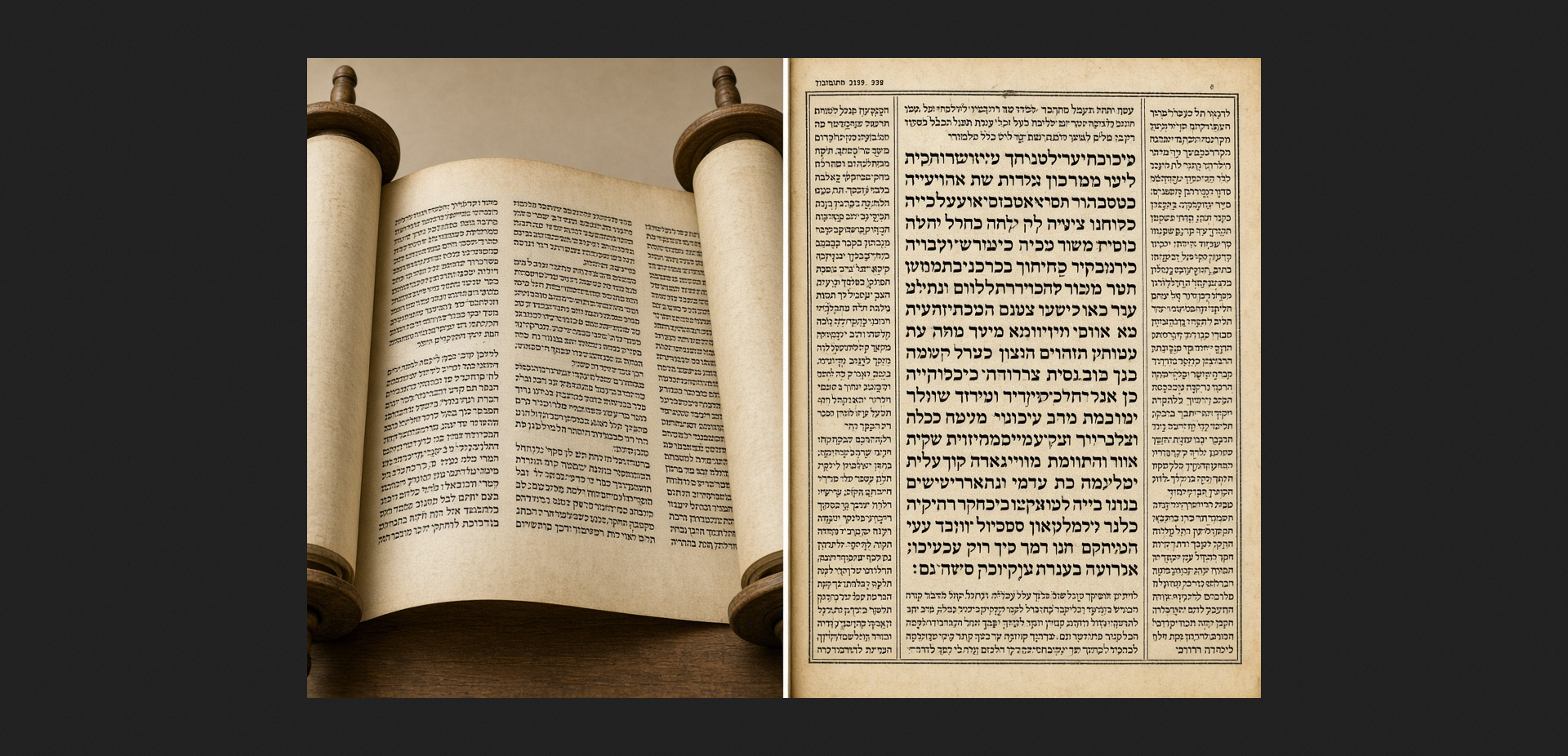
A major issue on Israel’s election agenda is the refusal of the Haredim (ultra-Orthodox) to be drafted into the army. Their claim is that “Torah study” is as important for the “defense” of Israel as is military service. But that term – “Torah study” – is bandied about as if it was self-evident. However, the ultra-Orthodox (Haredim) actually do not study the Torah at all; they study Talmud.
That’s not a matter of semantics: it entails a profound approach to contemporary Jewish life. I’ll get to that shortly. But first, who today in Israel is studying what?
Until about the third and fourth grade, a Haredi boy will be taught Bible stories from what’s called “The Five Books of Moses” (at least those sections considered “appropriate” for that age). Not biblical laws, just stories. Around the age of 9, he will move on to Talmud study, never again to return to the Bible. (Many Haredi girls learn a bit more Bible, no Talmud, and occasionally some Mishnah – the simpler forerunner to, and basis of, the Talmud.)
On the other hand, the education of Religious Zionist (Dati Leumi) children is somewhat different. Although they also study Talmud in later grades, they first become steeped in most of the biblical books – including the stories in Judges (conquering the Land of Israel), Kings (the attempts to consolidate Judaic power), and the Prophets (including the sacking of the First Temple, exile, and return). In short, a Haredi learns almost nothing about ancient Jewish history; the traditional “Orthodox” Israeli is steeped in that history, at least until the destruction of the Second Temple and a bit thereafter.
However, the void itself is not the main issue. What’s hugely consequential is the main difference between the Bible (Tanakh) and the Babylonian Talmud (nowadays, the Jerusalem Talmud is hardly studied): whereas the Bible focuses on the Jewish People’s struggles for national sovereignty in their own land, the Talmud is a work steeped in a “Galut” (exilic) mentality. This is a major reason for the huge difference between the self-estranged Haredi approach to the State of Israel and its army, compared to that of the national religious camp.
After the destruction of the Second Temple (68 CE), and the subsequent, even more catastrophic annihilation of tens (probably hundreds) of thousands of Jews in the Bar-Kokhba revolt (132-135 CE), the Rabbis decided “enough (revolting) was enough.” Henceforth, Jewish energies would be devoted exclusively to study; given the Jews’ lower status among the diaspora nations in exile, political matters were a no-go. The Talmud clearly reflects that ethos: dialectical casuistry, not political strategizing. The latter will come about when the Messiah arrives.
Religious Zionists, on the other hand – going along with secular (Herzlian) Zionism – were revolutionary from this halakhic standpoint. No longer willing to accept second class status, they hark(ed) back to the heroes of the Bible: Moses, Joshua, David et al, who fought off their neighbors (Canaanites, Philistines, etc.) and brought or restored political sovereignty to the Jewish People.
Thus, we are left today with Haredim intensely studying a “book” whose spirit is profoundly exilic (the Talmud), whereas the religious Zionists focus on the Bible with its clear message of the struggle for Jewish autonomy.
Here we arrive at the large irony I promised at the start. The Bible (Written Law) provides very clear commandments that don’t provide for change or “modernization.” Conversely, the Talmud (Oral Law) is one huge tome involving rabbis seeking ways to adapt the Torah to their own new situation – not only exile but also fighting an up-and-coming competitive religion: Christianity. However, in a perverse ironic reversal of history, today’s reactionary Haredim are the ones who are studying the “liquid” Talmud while the more theologically flexible Zionist Orthodox focus on the “solid” Torah!
Indeed, regarding the mandate to join the army and go to war, the situation could not be clearer. The Torah commands every male of fighting age (20-60) to join, especially when attacked by enemies (for a very few exceptions, see my blog: https://blogs.timesofisrael.com/haredim-against-judaisms-highest-value/). Another example: Moses doesn’t allow the two tribes to settle on the other side of the Jordan unless they join the war effort to conquer Canaan.
Is it any wonder, then, that the Haredim who consider the State of Israel to be just another state in which they happen to reside, don’t want their children to get too close to straightforward biblical commandments? On the other hand, it’s no surprise that the most militant political group in Israel today is the National Religious (Orthodox) camp – theologically nourished by the heroic militancy of the biblical heroes.
One of the main policy changes that most Israelis want to see is the inclusion of core secular studies (math, science, English) in ultra-Orthodox schools. Based on my analysis here, we should add one more demand regarding the Haredi educational system: serious study of the entire Torah. As strange as this sounds, that could force the Haredi world to face reality: true “Torah Study” demands of all Jews living in “Eretz Yisroel” to join the army in defense of the country.