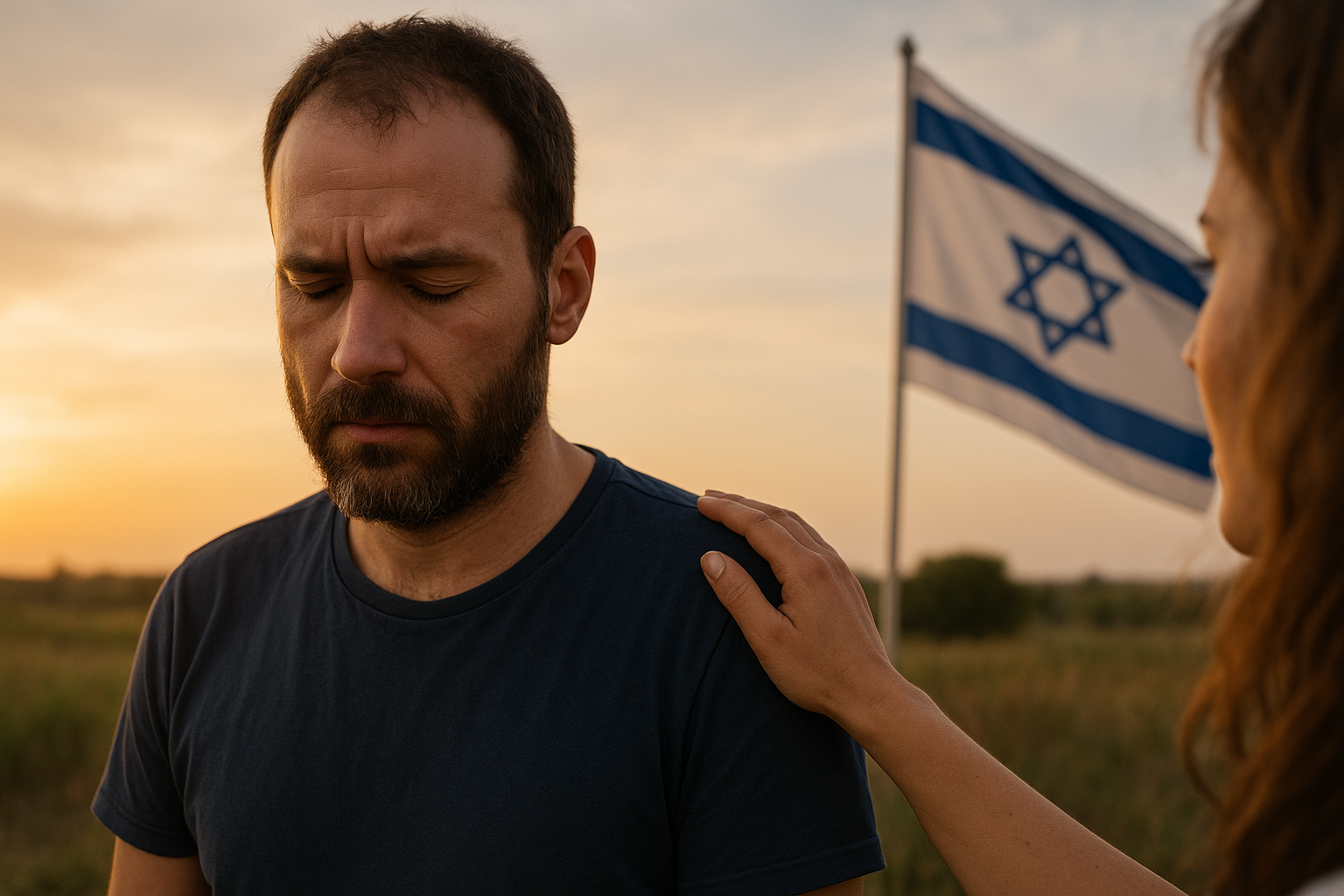

Sabine Sterk: Rebuilding the Light: How Israel Can Help the Returned Hostages Heal
This week, twenty Israeli hostages finally came home. They were deliberately starved, held in darkness, chained, and subjected to physical and psychological torture. Some could not walk when found. Others were so malnourished that even a sip of water required medical supervision.
And yet, they are home.
Their return is not the end of their ordeal, it is the beginning of a new journey, one that Israel must handle with both compassion and wisdom. Because what these men and women endured is beyond comprehension, and the process of bringing them back to life, physically, mentally, and spiritually, requires something deeper than medicine alone.
Israel’s hospitals and rehabilitation centers have been preparing for this moment. Teams of trauma specialists, doctors, psychologists, nutritionists, and social workers have developed special programs for the hostages, programs built not on theory, but on listening. Because, as clinical psychologist Lirat Margalit so powerfully wrote:
“One of the most difficult dilemmas in rehabilitating hostages who returned in the first rounds was that… we have no reference. No manual, no studies on such prolonged captivity. No therapeutic protocol that says: ‘Turn to page 37, what do you do now?’ So we listen. Not with intellect, but with the body, the breath, the eyes.”
This kind of listening is what defines true healing. The professionals working with the hostages know that before they can address trauma, they must first restore control. These men and women lived for months, some for years, under a regime where every choice was stripped away: when to eat, when to speak, even when to breathe freely.
Margalit explains that it starts with the smallest acts:
“Do you want water or tea? Do you want to sit by the window or the door? ” These may seem trivial, but to someone whose autonomy was stolen, they are steps toward reclaiming life itself.
Healing after such captivity is not about interrogation. It is not about forcing survivors to relive their horrors. It is about creating space, silent, patient, unconditional space where trust can grow again.
“A common mistake after trauma,” Margalit writes, “is the urge to ‘know what happened.’ But those who survived years of captivity don’t need questions, they need presence. So instead of ‘Tell me,’ we say, ‘When you’re ready, I’m here.’ That silence, that choice, is already healing.”
This philosophy is reflected in Israel’s current approach. Each returning hostage is paired with a multidisciplinary care team that focuses not only on physical rehabilitation but on restoring identity and dignity.
Nutrition is carefully reintroduced, light is adjusted gradually, and every action is guided by one goal: to give back the sense of control that captivity destroyed.
But the healing process extends beyond the individuals. Families, too, carry deep trauma. For over two years, they lived in limbo, hoping, fearing, mourning, waiting. The reunion, when it comes, is not a return to what was. It is a meeting between two new versions of people who have both changed profoundly.
“The task,” Margalit reminds us, “is not bringing him home, but building a new home around him.”
This is perhaps Israel’s greatest challenge now, to rebuild not only bodies and minds, but homes, relationships, and communities. These families need long-term support, not just medical care but counseling, education, and social understanding. Society must learn not to idolize them as heroes nor reduce them to victims, but to let them simply be; Survivors reclaiming their humanity.
And there must be patience. Some will speak; others will never want to. Some will try to return to work, others will withdraw. Healing will not follow a uniform path. As Margalit wisely concludes:
“Not every story has ‘post-traumatic growth,’ and you don’t need to force it. There is no obligation to ‘become stronger’ or ‘learn something.’ Sometimes trauma is just trauma, and healing is just survival.”
For Israel, the moral imperative is clear: to hold space for survival, for silence, for dignity. The country that brought its sons and daughters home must now accompany them on the long road back to themselves.
Because bringing them back alive was only the first rescue. Helping them live again is the second.