
Lucy, Maia, and Rina Dee
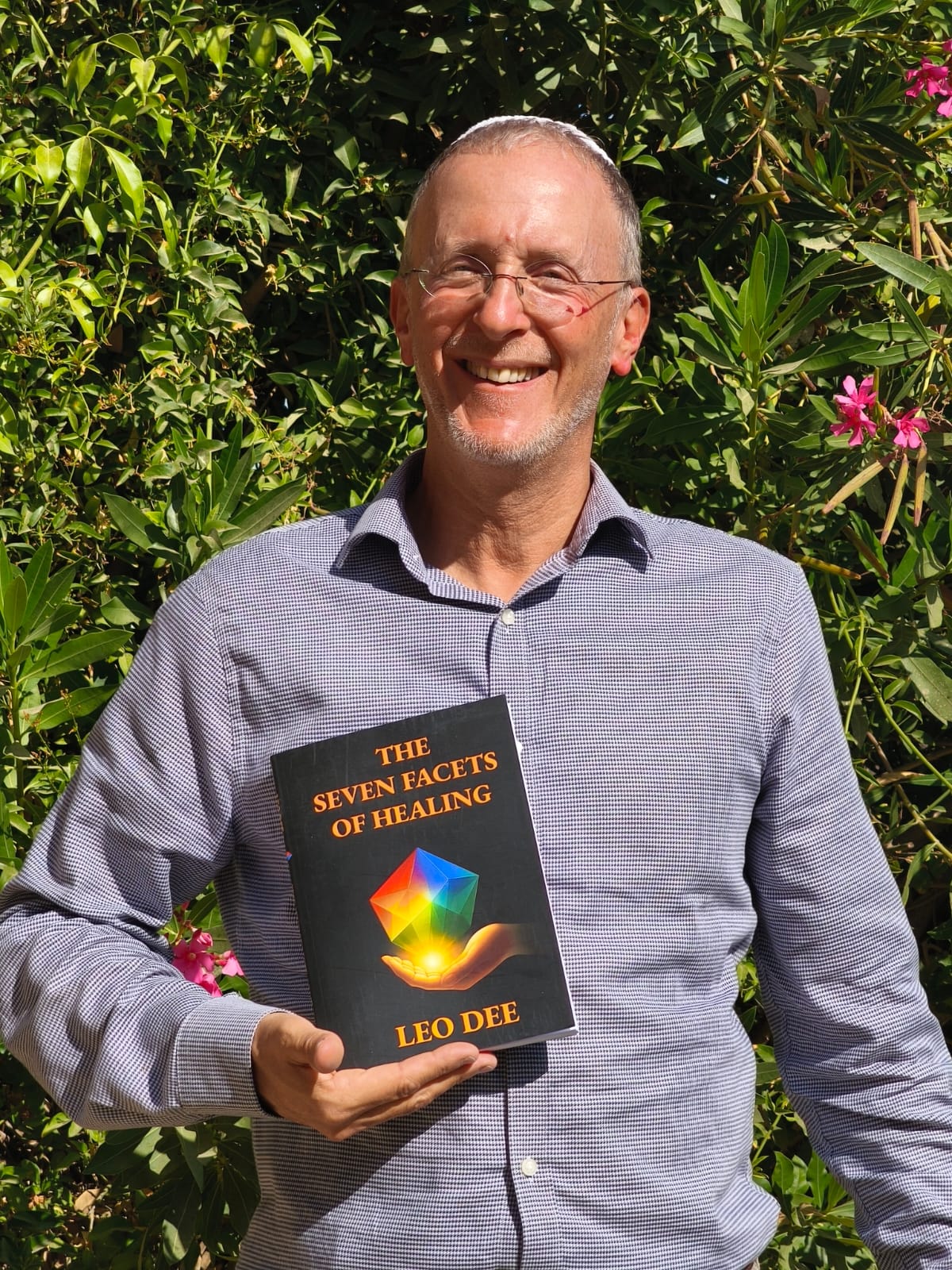
Jonathan Feldstein: The Seven Facets of Healing with Rabbi Leo Dee
In April 2023, Rabbi Leo Dee’s life shattered in an instant. While driving with his family for vacation on the second day of Passover, his wife Lucy and two daughters, Maia and Rina, were murdered in a Hamas terrorist ambush. Leo, driving ahead in another car, survived along with three other children who were with him. What followed was not only profound personal grief, but the challenge of being a traumatized husband and father, suddenly raising his grieving children alone. Yet, in almost three years since, Leo Dee has emerged as a remarkable voice of resilience, faith, and purposeful healing, most notably through his book “The Seven Facets of Healing.”
In a recent conversation on “Inspiration from Zion,” Leo shared his journey and personal story of transformation. Originally a successful private equity professional in London, driven by a sense of calling in his London community, he left the world of finance and he and Lucy made aliyah to Israel in 2004. The tragedy of 2023 could have broken him, but instead it revealed strengths forged over a lifetime, especially throughout his 25-year marriage, that taught him empathy and perseverance.
Central to Leo’s message is the idea that tragedy marks a clear breakpoint. Thirty days after the attack, as the formal Jewish mourning period ended, he gathered his surviving children and declared: “We are entering a new world.” This was not denial but deliberate reframing. Drawing on the Jewish morning prayer that God “renews creation every day,” he taught his family—and now teaches others—that every moment offers the possibility of a new beginning. Rather than live forever in the shadow of loss, one must consciously step forward into a future that honors the past without being imprisoned by it.
This mindset echoes the innovative framework Lucy herself created early in their marriage. Frustrated with date nights derailed by complaints, she devised “The Seven Facets for Living” to ground even challenging times: Friends, Family, Fitness, Fun, Finances, Firm (work/function), and Faith. By requiring discussion of all seven, Leo and Lucy gained the perspective that difficulties in one area were offset by blessings in others. After the tragedy, Leo realized these same categories became the primary pillars for healing. Friends evoked memories of social gatherings with Lucy; family highlighted absent voices; even leisure activities stirred pain. Thus, Lucy’s “Seven Facets for Living” became the foundation for Leo’s “Seven Facets of Healing.”
His book, structured around these categories, offers practical wisdom born of hard experience. Leo discovered that post-trauma instincts are often exactly wrong. Hollywood portrays bereavement as endless tears and withdrawal; in reality, those behaviors prolong suffering. He shares how, in the first year, he instinctively avoided smiling in photos with visitors, believing it would dishonor his lost loved ones. Only later did he recall positive-psychology research: smiling actually generates happiness through serotonin release. He also understood that despite his loss, Lucy would not want him to be unhappy, nor would he wish that for her should he have been in the wrong car that horrible day. It was not smiling, not being happy, which would dishonor Lucy’s memory. Forcing smiles again, allowing himself to be happy, was counter to his instinct at the time, but it helped lift his mood and create a model of resilience for his children.
Perhaps the deepest insight and foundation of healing concerns faith. Leo publicly affirmed God’s greatness daily through leading prayers and reciting Kaddish, the mourner’s prayer, despite every reason to feel anger. He realized this public declaration served three purposes: elevating the souls of the deceased, strengthening the mourner, and—most powerfully—demonstrating to the community that faith can endure unimaginable tragedy. When well-meaning people asked “What if?” questions (What if you had left later? What if you never moved to Israel?), Leo eventually forbade such speculation as futile. While these were all questions he asked himself, Leo instead posed one permitted “What if?”: What if this was always God’s plan? Accepting that reality shifts focus from regret to response: given these cards, how will I play them?
Leo extends these lessons beyond personal grief to national trauma. Six months after the murder of Lucy, Maia and Rina, the October 7 Hamas attack and massacre brought collective Israeli suffering. He sees parallels: just as individuals must reframe life after tragedy, a nation must find new purpose. He credits Israel’s resilience to an underlying faith—even among the secular—that manifests as trust in the people, the land, and the biblical promise. On October 8, when government and army structures faltered, ordinary citizens instinctively asked, “Where do they need me?” and filled every gap—supplying soldiers, housing evacuees, feeding frontline troops.
This question—“Where do they need me?”—had been Leo’s guiding mantra. It once drove him from a lucrative career in finance into the rabbinate. Now it fuels his speaking worldwide. He urges Jews to build Israel and Christians to transform the rest of the world with biblical values. Having recently addressed evangelical churches in Canada, he expresses profound gratitude for Christian Zionists who, he believes, remain the West’s last strong defenders of Judeo-Christian morality.
For those currently in pain, Leo offers two immediate consolations. First: your loved ones in heaven want only your happiness; prolonged misery dishonors their memory and harms surviving family. Second: the present is illusory—only past and future exist. We can choose to warehouse pain in the past (visiting it on memorial days) while living fully in an open future.
Leo Dee’s story is not one of superhuman invulnerability but of deliberate, faith-guided choices. He grieves deeply yet refuses to let grief define the remainder of his life—or his children’s. Through “The Seven Facets of Healing,” he extends Lucy’s legacy, turning private wisdom into public light. In an age of widespread trauma—personal and collective—his voice reminds us that healing is possible, purpose is renewable, and every new day truly is a beginning God offers afresh.
Follow the full inspirational conversation with Leo Dee on “Inspiration from Zion” on YouTube and anywhere you listen to podcasts.