Jonathan Feldstein: 2026 About Somaliland and Iran
Who Cares About Somaliland

If you’re like me, not only did you never care about Somaliland, you probably never even heard of Somaliland until last week. At best. My initial instinct was that the name sounded like a puzzling cross between Somalia and Never-Neverland. However, after learning about Somaliland, it seems a lot of people do, in fact, care.
Somaliland is a Muslim nation of several million, on the Horn of Africa. Its immediate neighbors are Somalia to the south, Ethiopia to the west, and Djibouti to the north. To the east, and perhaps most significantly, Somaliland juts out into the Gulf of Aden, one of the most important and strategic bodies of water in terms of global shipping.
In recent years, this became more significant as the Houthis, an Islamic terrorist group in Yemen, used their strategic location to threaten, divert, and impact global shipping to the degree that the US and other Western nations undertook a campaign to mitigate the Houthis’ dangerous threats. Sitting opposite Yemen, Somaliland is a welcome, stable, democratic nation that declared independence from Somalia in 1991.
Why did Somaliland leap into the news last week? Because Israel became the first country in the world to recognize Somaliland as an independent state. The reasons for doing so are intuitive on many levels.
If the past two years of war have taught Israel anything is that it needs allies. Somaliland presents an opportunity to have boots on the ground, at least figuratively, in the Horn of Africa. There’s been talk about Israel establishing a military base there, which makes counteracting threats from Yemen and others that much easier. Minimally, it affords Israel greater intelligence gathering opportunities regarding Iran and the Houthis’ missile, drone, and other activities.
With the Houthis specifically targeting Israeli and Israeli-bound ships, a connection to or presence in Somaliland provides protection for Israeli shipping and for global shipping alike. It’s estimated that a third of world shipping passes through the Red Sea and the Bab el-Mandab Strait.
It may also be in Israel’s interest to facilitate its ally, Ethiopia, to access a reliable port through which to operate.
As much as it’s important to strengthen allies in the region, it’s also important to counteract Israel’s adversaries and other bad actors. For some years, Turkey has sought to widen its corrosive Islamist regional influence, not only in neighboring Syria and other Middle Eastern countries, but in Africa as well. In parallel, Turkey has become an increasing and overt threat to Israel, with its president, Erdogan, openly stating that he seeks to conquer Jerusalem.
Coincidentally, the same week as Israel recognized Somaliland, Israel also signed a defense pact with Greece and Cyprus, directly challenging Turkish influence in the Mediterranean. Israel has also insisted that Turkey not be part of any international presence in Gaza, nor on President Trump’s “Board of Peace.” Ankara is watching closely.
In addition to Turkey, Iran has long used eastern Africa as a route through which to smuggle weapons, and China has exerted increasing influence through its Belt and Road program to expand its own nefarious influence.
Simply, Israel sees the Red Sea and the Horn of Africa as vital to its national security. Mutual recognition to and of an Islamic country is a smart calculation that may have broad dividends as noted above, as well as economically and diplomatically.
But not everyone is so happy with Israel recognizing Somaliland, or Somaliland recognizing Israel. There have been many outright condemnations. Regarding the later, it’s ironic that Turkey is one of the loudest critics of the move, as Moslem country itself that still maintains diplomatic relations (albeit tense and diminished) with Israel, and has done so for decades. As more Arab and Islamic states are lining up to be part of the Abraham Accords, why would this be anything less than celebrated around the world? Why did the United Nations Security Council convene an emergency meeting, three days after Israel’s recognition of Somaliland take place?
The answer lies in the double standard most of the world has relating to Israel. Only their foreign policies are legitimate, but not Israel’s. Why should Israel have any less right to establish diplomatic relations with a country that has existed independently for nearly a quarter of a century, that has its own military, a recognized non-Arab ethnic group, stable elections, currency, and does not threaten its neighbors?
Why should a country that exists like this not be recognized, whereas growing numbers of countries recognize a fictitious Palestinian state whose leaders are at open war with one another, neither of which control the territory they claim as their state, no currency, no elections in two decades, an ethnic group that was only invented in the 1960s, and which overtly threatens its neighbors.
Not only should they not be criticizing Israel, but the world should be celebrating and following suit. The Saudis, Emiratis, and Egyptians should be leading the pack if only to counteract Iranian and Turkish influence in Africa, in Syria, and in Gaza.
Perhaps because Somaliland is made up of a non-Arab ethnic minority, and Israel can be viewed as doing something good as compared to being blamed for everything, nobody is looking at this as righteous, or cares about Somaliland. But the moment Israel steps in, it’s a lightning rod for the world to (overreact)act as if it’s done something evil.
There’s another issue that cannot be overlooked when it relates to most anything in Israel as we begin 2026. Whether early elections will be called in the spring or summer, or the current government remains in power until the fall when elections are scheduled, in 2026, Israel will see national elections the first time since the war began in 2023, and all Israeli politicians will be looking at everything they do as another way to win votes, or peel votes away from others.
Do Israelis care so much about Somaliland? Is it likely to become the next hot tourist destination? Probably not. But diplomatic relations with another country, especially a Moslem located where it is, it’s not a bad thing for which some politicians will also look to take credit.
For Such a Time as This in Iran

The words of Esther 4:14 have never been more relevant. “And who knows if you have come to your royal position for such a time as this?”
The words were first spoken in Persia, by Mordechai to Queen Esther, imploring her to intervene with her husband, the King, to reverse the death decree against the Jewish people, not just in Persia but throughout more than 100 provinces under its empire.
In recent years, the verse has become widely used to motivate others to take action, to follow the path of Esther who risked her life to do so, and specifically among Christians to stand with Israel and the Jewish people. For such a time as this. But today the words have never been more important, not just for these important reasons but because they speak to modern Iran and Iranians, Persia, from a Jewish leader in ancient Persia.
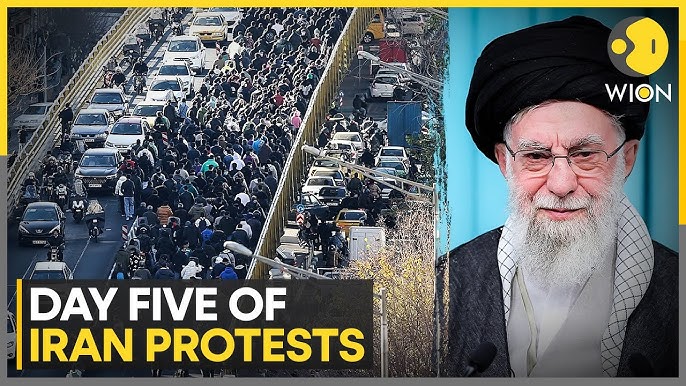
“For such a time as this” is a call to action being echoed in different words across Iran today. Massive, even unprecedented protests have ignited tens of thousands of Iranians against the evil Islamic regime that hijacked Iran in 1979. Iranians know this may be the best opportunity since then to unshackle themselves,
Listen to their modern words echoing Mordechai’s charge to Esther in what the protesters are chanting.
My friend Marziyeh Amirizadeh has updated me and the world on developments as they occur. She was born in Iran where she experienced the evil misogyny of the Islamic regime firsthand. She was arrested and sentenced to death in 2009 because she converted to Christianity and refused to renounce her faith. She’s shared videos of Iranians chanting slogans calling for the restoration of the Pahlavi dynasty and the return of Crown Prince Reza Pahlavi.
“This is the final battle, Pahlavi will return.” “Reza Shah: May God bless your soul.” “O the king of Iran, please return to Iran.”
Parallel to chants of “Long live the Shah,” Iranians have been chanting, “Death to (the) dictator” and “As long as the mullahs (Ayatollahs) are not buried, Iran is not (our) homeland.”
She has also shared that university students in Iran have joined the protests. This is significant because the Islamic revolution that brought the ayatollahs into power was largely led by students. This can be a corrective remedy, bringing down the Islamic regime that young people were fooled by two generations ago. Their chants are not just against the regime, but exposing the three pillars of evil that prop up the regime. “Death to three corrupted groups, Mullahs (Ayatollahs), leftists (Reformists), Mojahedin (MEK).”
In addition to calling for Pahlavi to return, protesters have addressed the corruptive global influence of the Islamic regime, funding a wide-reaching terror network. “No Gaza, No Lebanon, my life for Iran.”
The later is not just a charge to Iranians but also to the world. Of course, Israel has suffered the most from Iranian funding of Hamas, Hezbollah, and the Houthis, but the regime’s tentacles spread much wider. It’s time for the world to stand up, once and for all, to bring down the Islamic regime, eviscerate one of the main sources of Islamic extremism, and bring us closer to the realization of President Trump’s resolution for 2026, “World peace.”
There is nothing more significant that can be done toward world peace than eliminating the global threats to peace posed by the Iranian regime. The future of the West and the entire world are at stake.
Across Iran today, we see average Iranians putting their lives at risk, like Esther, for their future. Yet, the world would also do well to heed Mordechai’s words to Esther that preceded “For such a time as this.” He says, “For if you remain silent at this time, relief and deliverance for the Jews will arise from another place, but you and your father’s family will perish.” Silence is compliance.
Iranians know this truth. If something is not done now, they and their families will perish, another generation under the heel of the ayatollahs. The West and world leaders need to heed this as well, or risk their own peril. The regime’s president recently affirmed this, declaring a full war against Israel, the United States, and Europe. The growing Islamic influence in many countries is already astounding and dangerous. If the Islamic regime is able to survive and thrive, its evil influence will extend throughout its own countries and risk bringing them down as well.
This week, consider how many cities canceled their New Year’s celebrations due to extremist terrorist threats. From where did the threats emanate? The Jamaican bobsled team? Buddhists? No, from extremist Islam that has penetrated cities across the world.
The remedy for this and many other extremist Islamic threats worldwide, and the quickest and most radical transformation to end the greatest global threats and instability since World War II, or maybe ever, is to bring down the Islamic regime.
Israel has skin in the game, but cannot and should not act alone. Doing so gives the regime the excuse to blame Israel for the protests. In Israel, reports of Iranian protests are at the top of most news programs, with analysis and commentators going into detail, and Iranians inside Iran with their voices altered to protect their identity, providing firsthand updates. Most of the rest of the world is underreporting the protests’ significance, the potential, and even giving oxygen to the ayatollahs.
As much as Mordechai’s imploring Esther has never been more important, so too are the words of Jeremiah 49:34-39 relevant. After Israel’s 12-day war with Iran in June, I called it the most Googled prophecy ever. It’s one of a few prophecies that do not relate specifically to Israel and the Jewish people, but to Elam, or modern Iran.
“This is what the LORD Almighty says: ‘See, I will break the bow of Elam, the mainstay of their might. I will bring against Elam the four winds from the four quarters of heaven; I will scatter them to the four winds, and there will not be a nation where Elam’s exiles do not go. I will shatter Elam before their foes, before those who seek their lives; I will bring disaster upon them, even my fierce anger,’ declares the LORD. ‘I will pursue them with the sword until I have made an end of them. I will set my throne in Elam and destroy her king and officials,’ says the LORD. ‘Yet I will restore the fortunes of Elam in days to come,’ declares the LORD.”
I thought that the significance of Jeremiah 49 is that God will bring the downfall of the Islamic regime in the 49th year since the Islamic revolution. 49 is seven times seven, part of the Biblical equation of the jubilee year when property returns to its original owners. I saw in Jeremiah 49 that God would restore Iran in the 49th year. That would be 2028. Two long years from now.
However, it’s impossible to imagine Iranians and the world suffering another two years of the terror to which we have been subjected for nearly half a century. It’s unthinkable to imagine Iran continuing to rearm and rebuild its nuclear program. It’s unthinkable to imagine the brutal suffering of all the Iranians for another two years, especially in the wake of these current protests, for which there is likely to be a more brutal response.
It’s unthinkable to consider Iran funding global terror networks indefinitely, and the world is missing this opportunity to stop that. It’s unthinkable to consider the continued influence of Iranian agents wearing masks of reformists, penetrating the highest levels of power around the world. They must be outed, and the regime for which they are puppets must be eliminated.
My unsolicited advice to Crown Prince Pahlavi is that he needs to work the phones relentlessly, as if his life and the life of Iran counted on it. It does. He needs to lead the Iranian people, encourage them, give them hope, and bring world leaders to their cause. We are raising seed money for him and this transformation of Iran.
Next month is the “anniversary” of when Pahlavi and his father, the Shah, were forced to flee Iran, ushering in the ayatollahs and their brutal Islamic regime. Let the regime never see another anniversary, and let me be wrong, that the Iranian people and the world will be free from the ayatollahs this year.