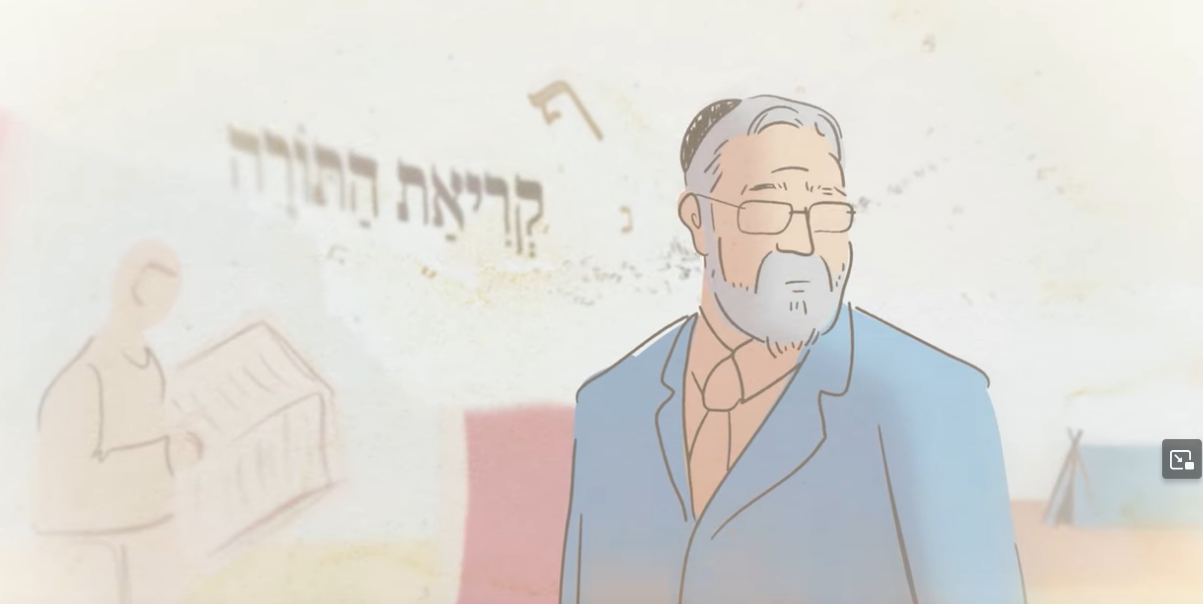
We never simply ‘read’ the Bible. We study it, interpret it, we argue with it, question it, debate with it. The verb ‘reading’ does not quite do justice to the way we interact with the Torah.
Even the phrase keriat ha-Torah, which is usually taken to mean ‘reading the Torah’ probably does not mean that at all. Keriat ha-Torah, properly understood, is a performative act. It is a covenant ratification ceremony, like the one Moshe performed at Sinai. Like the covenant renewal ceremony celebrated by Ezra after the return from Babylon.
Keriah in this sense it does not mean reading. It involves total engagement. And what has made that engagement possible is the rabbinic concept of Midrash – the rabbinic response to the end of prophecy.
So long as there were Prophets, they brought the Word of God to their generation. The Divine Word lived within the currents and tides of history.
But there came a time when there were no more Prophets. How then could Jews bridge the gap between the Word and the historical situation?
It was an immense crisis. The Sadducees confined themselves to the literal text. Other groups developed a kind of biblical exegesis known as pesher – hidden meaning – that often has to do with events or people in the present.
The Rabbis, however, developed the technique of Midrash. So powerful was this form of engagement that the single greatest institution of rabbinic Judaism is named after it: the Beit Midrash – the home of Midrash.
Essentially, Midrash is the bridge across the abyss of time between the world of the original text, and our world in the present, of time and place. Midrash asks not “What did the text mean then?” but rather, “What does the text mean to me, here, now?”
And behind Midrash are three fundamental principles of faith.
First, the Torah is God’s Word, and just as God transcends time so does His Word. It would be absurd to suppose some human being more than three thousand years ago could have foreseen smart phones, social media, and being online, on-call, 24/7. Yet Shabbat speaks precisely to our need for a digital detox once a week. God speaks to us today in the unsuspected inflections of words He spoke thirty-three centuries ago.
Second, the covenant between God and our ancestors at Mount Sinai still holds today. It has survived centuries of dispersion. The Torah is the text of that covenant, and it binds us still.
Third, the principles underlying the Torah have changed very little in the intervening years. The values that underlie the Torah are strikingly relevant to contemporary society, and to our individual lives in the 21st century secular time.
So, we don’t merely read the Torah. We bring to it our time, our lives, we bring to it our most attentive listening, and our deepest existential commitments.
My own beliefs have been formed in that ongoing conversation with the biblical text. This is how I have come to see the world, having listened as attentively as I can to the Torah and its message for me; here, now.
The Torah is not a systematic treatise about beliefs but it is a unique way of seeing the world and responding to it. And in an age of moral darkness, its message still shines. So, at any rate, I believe.