
Prof. Sam Lehman-Wilzig: Israel-Restrict Voting Rights? Many Democracies Do It!
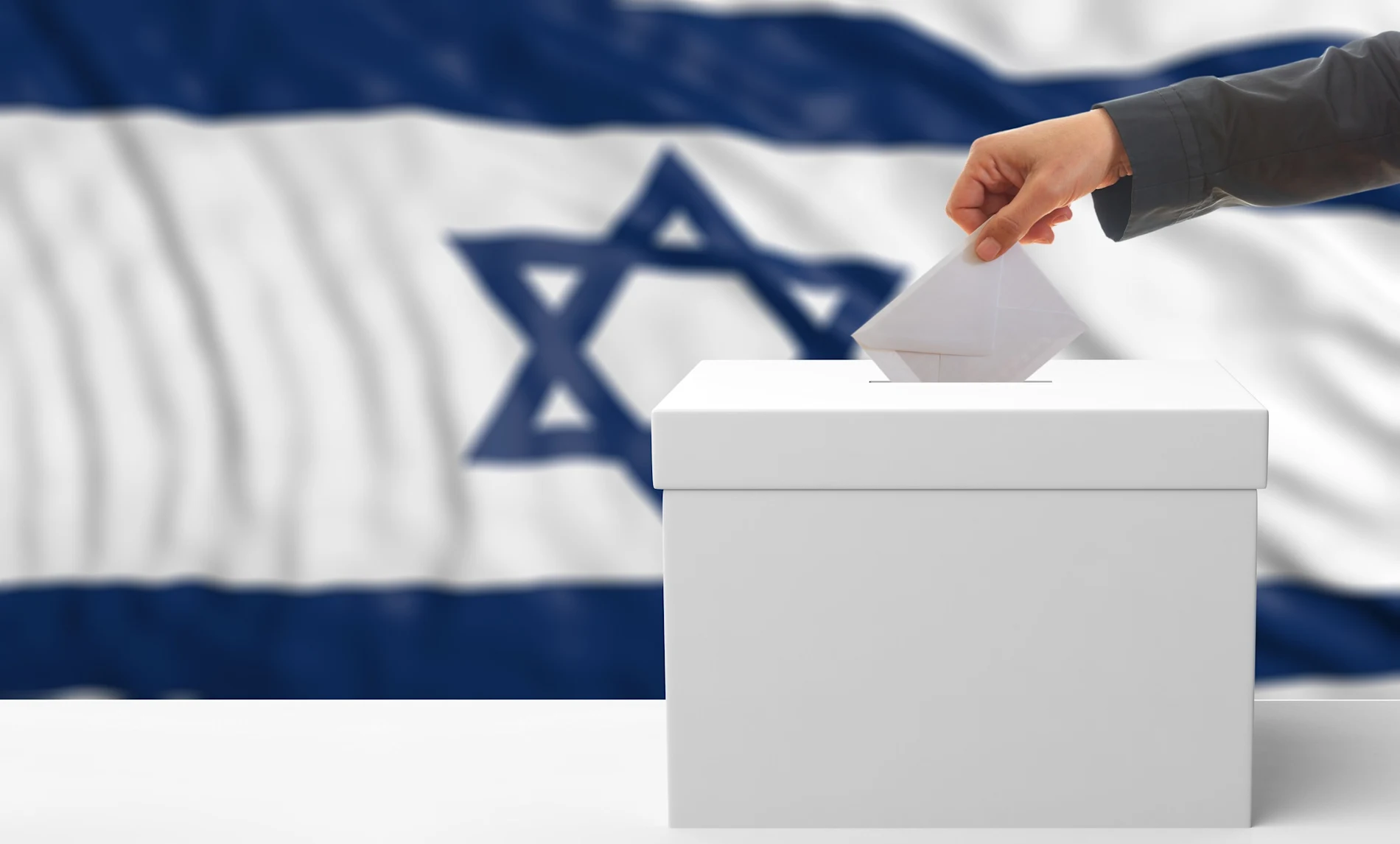
Once again, the issue of ultra-Orthodox army service has become a very hot topic. In fact, it’s such an emotional issue that Yair Lapid – leader of the Opposition and head of the Yesh Atid party, normally a levelheaded, middle-of-the-road politician – announced that when he joins the next government (assuming that the Opposition parties win the next election), he will push for a law that denies the vote from ultra-Orthodox men who refuse to be drafted into the IDF.
The political response was fast and furious – even among several of his coalition partners: “it is undemocratic to restrict the right to vote.”
Unfortunately, they don’t know “democracy” very well because several major democratic countries around the world do indeed restrict the right to vote for various forms of criminal behavior. Here’s a short but incomplete list:
In the United States, most states prohibit people convicted of felonies from voting while in jail. Some even extend this ban to post-jail parole or probation. A few states (e.g., Florida, Delaware, Iowa, Kentucky) permanently disenfranchise felons convicted of sexual offenses, election-related lawbreaking, or violent crimes.
Great Britain is even more draconian: all prisoners (except those awaiting trial) are banned from voting while serving any jail sentence regardless of offense! Once they are released from prison, they do regain their voting rights. The state taketh, and the state giveth back…
Italy is just a bit more lenient: serious offenders (those with life sentences) lose their voting rights, permanently. Judges can also ban voting for less serious offenses depending on how severe is the sentence.
Two other countries with longstanding democratic systems – Finland and New Zealand – restrict voting rights for those convicted of election-related crimes or corrupt practices. Disenfranchisement is not permanent; it only extends for a number of years after the criminal’s sentence is completed.
Some other countries have disenfranchisement policies as well, although relatively restricted. For instance, Germany, Poland, and Iceland. In Germany, a person loses the right to vote only for reason of treason, espionage, terrorism, and electoral fraud. Iceland only nullifies voting rights for severe crimes considered by public opinion to be “heinous.” For its part, Poland offers discretion to the courts. They can ban voting rights for serious crimes and electoral offenses – at times even after the convict’s release from prison.
In light of all these precedents, a possible argument against doing something similar in Israel is that avoiding the army draft is not similar to murder or other heinous crimes. I heartily disagree. Given Israel’s existential security problems (“dangers” would be a more appropriate term), not serving in the army – especially when we’re talking about hundreds of thousands of draft dodgers – can indirectly cause the death of other Israelis who would be killed in terror incidents from within and outside Israel’s borders due to a dearth of security forces. Oct. 7, 2023, was proof enough of such a gruesome potentiality.
Indeed, as the above list of countries clearly shows, many democracies have chosen different types of crime for disenfranchisement. There is nothing inherently “undemocratic” about Israel deciding that the crime of draft dodging (it’s already a crime, according to Israel’s Supreme Court decision more than a year ago) is serious enough to warrant such a draconian measure.
Of course, this doesn’t mean that not serving in the IDF ipso facto leads to disenfranchisement. Rather, the issue is one of not appearing at the draft office (“Bakum” in Israeli parlance); it’s the IDF that has to decide whether to give a deferment and/or what alternative task the potential draftee can fulfill e.g., Sherut Leumi (a form of quasi-civilian national service).
Indeed, mentioning Sherut Leumi brings up another related issue: national service for Israel’s Arab sector. One of the ways to further undercut the legitimacy of ultra-Orthodox draft dodging is to extend the obligation of serving the country in some capacity to Arabs and other non-Jewish minorities. Clearly for obvious reasons, at this stage no one wants to force Arabs to serve in the IDF (although they can volunteer, as quite a number do: especially the Druze and a good number of Bedouin). However, as citizens of the country they can certainly be required to do national service in their own sector, helping in hospitals, schools, municipal improvement, etc.
Moreover, making some sort of service universal for all sectors of Israeli society would actually boost its political attractiveness, given that right-wing parties have been clamoring for similar treatment of Israel’s minority (non-Jewish) sectors. Once everyone has to serve, the ultra-Orthodox’s present refusal would lose whatever political legitimacy it has today.
All this would have a dual benefit: not only filling gaps in the country’s (wo)manpower needs – civilian and military – but also strengthening internal cohesion by having Israel’s “isolationist” sectors more involved in mainstream society. Most haredim and many Arabs have little chance (or reason) today to mix with Israel’s majority population. This is a societal problem: who you don’t know first-hand is always more “threatening” than people with whom one comes into contact. More direct interaction would be a step in the right direction of social tolerance.
In short, national service of different types is the quid pro quo for living in, and being protected by, the state. Given Israel’s great need for soldiers, and its acute shortage of civilian workers in certain lines of work, universal national service is a must. Who and what type of service should be up to the authorities to decide – and not for each sector to choose by and for themselves. Sanctions for those who refuse to fulfill their duty to the country – even disenfranchisement – is certainly not beyond the democratic pale