
Prof. Sam Lehman-Wilzig: Far and Wide: The War’s Other Ramifications
This war won’t only affect Iran, Israel, and the U.S., nor merely other Middle East nations. In the long-term, the “outer circle” of the war’s effects might be just as consequential for much of the world.
First and foremost, unless the war ends in some sort of disaster for the U.S. (that’s hard to imagine at this stage), America’s standing will be reinforced as a major power willing to put its money where Trump’s mouth is. Yes, this president is notorious for his impulsive decision-making, but that renders it all the more difficult for America’s opponents to assess whether he would carry out any threats, thereby ensuring that they act with even greater caution regarding any aggressive actions on the world stage.
Where does this play out most clearly? Quite far away from the Middle East: Taiwan! The main goal of China’s ongoing military buildup is to threaten and possibly invade what it claims to be an integral part of China. What’s America’s interest in getting involved in such a conflict? Nothing short of preventing a disaster for the U.S. economy, given that most of the world’s highest quality, advanced AI and graphics microchips are manufactured in Nvidia’s partner Taiwan Semiconductor Manufacturing Company (TSMC). Nvidia is the most highly valued company in the entire world: close to $4.5 trillion (yes, trillion dollars). You don’t have to be paranoid to understand what a Communist Chinese takeover of Taiwan’s semiconductor industry would mean for the entire American (and western) high-tech economy.
America passed a law back in 1979: the Taiwan Relations Act (TRA). It mandated supplying defensive weapons to Taiwan so that it has the capacity to resist any use of force or coercion undermining its national security. Even President Biden repeatedly asserted that the U.S. would defend Taiwan if attacked; it’s hard to see President Trump backtracking on such a promise (not only because of the TRA law). Attacking Iran merely strengthens the impression that America’s promise regarding Taiwan is not to be sneezed at.
And there’s a more immediate effect: China is covertly receiving from Iran much of the latter’s oil well under the world’s standard price, as part of a long-term $400 billion strategic partnership between these two dictatorships. Should the current Iranian regime fall (with international sanctions eventually being lifted), that would be a significant blow to China’s economy as the “new Iran” could sell its oil to anyone at market rates. Indeed, some analysts see Trump’s attack against Iran as the opening salvo of a broad-based, clandestine, strategic, non-shooting war with China (https://www.thefp.com/p/the-iran-strike-is-all-about-china).
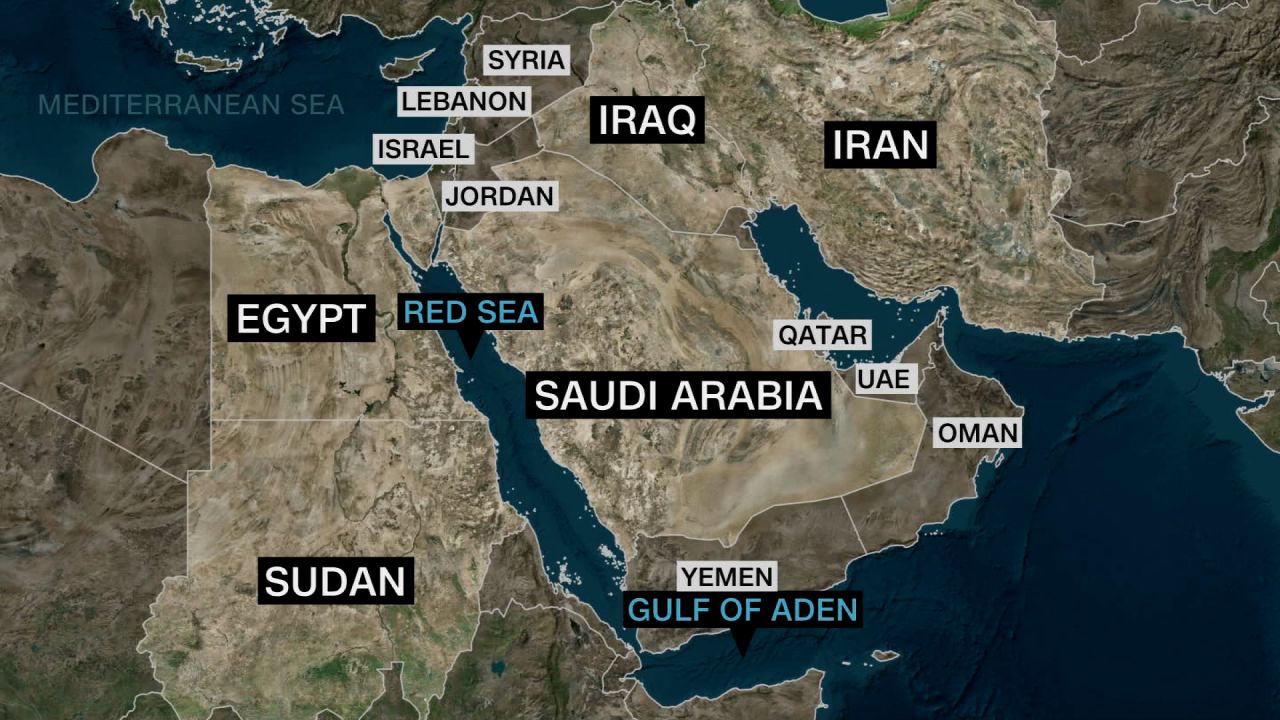
Another consequence of the current war is the position of most Arab countries vis-à-vis Iran and Israel. Over the past few years, Saudi Arabia took the lead in trying to “appease” Iran through improved relations, despite the age-old Sunni-Shiite divide. That’s now come crashing down, given Iran’s indiscriminate missile barrage against almost all the Arab countries in its vicinity. Indeed, in this war Iran by itself has attacked more Arab states than Israel has over the previous 78 years since its founding! Thus, the Arab Middle East security pendulum once more will swing in Israel’s favor, the country that’s doing their “dirty work” of removing the Iranian threat.
America’s internal, anti-war sentiment – led by the president’s own MAGA base – should have a paradoxical effect regarding other Trump-initiated conflicts. If anyone seriously thought that he would really countenance “conquering” Greenland, that’s dead in the water. For if the MAGA crowd is criticizing their leader’s military campaign against a true threat to world peace (Iran), one can just imagine how they would turn on Trump in any forceful takeover of Greenland. He already is suffering in the polls, even among his most ardent supporters. Trump’s political base might swallow one more war in going to the aid of a country like Taiwan, given the economic disaster that would ensue for America; anything short of that is not going to fly in MAGA-land.
For Israel’s own strategic interests, the consequences will be mixed – albeit more positive than negative. On the positive side: 1) Of the greatest significance, no more nuclear threat; 2) The radical Iranian regime being seriously weakened (even if not eliminated) means that its main proxies (Hezbollah and Hamas) will not be able to receive much financial backing, if at all; 3) Israel’s repeated military prowess (defensive and especially offensive), will only further supercharge its military export industry (prices on the Tel Aviv Stock Exchange actually rose when the war started!).
The downside for Israel: further loss of political support among the American public, perceiving that Israel “dragged” Trump into this war – a loss not only on the Democratic side where Israel’s position had already declined significantly over the course of the 2023-2025 Gaza War but as noted above, especially among the America-First right-wingers, many of whom used to be Israel’s strongest supporters.
And then there’s the BIG question: will the Iranian regime fall? If it does, that too would be a mixed blessing for Israel. On the one hand (assuming that a non-adversarial Iranian regime takes the Mullahs’ place), over the long haul, Israel could significantly reduce its military burden, with large-scale positive consequences for its economy and society. On the other hand, the world’s attention would then be free to focus far more on the Palestinian cause i.e., heavier political pressure being applied to Israel on the issue. And if that includes U.S. pressure – Israel’s “best friend” in need and in deed – any Israeli right-wing or even center-right government would find itself in serious trouble diplomatically and perhaps economically as well (e.g., reduction or cancellation of U.S. military aid) for being recalcitrant regarding Palestinian statehood.
In sum, for Israel and the United States, there is much to be happy about in its current demolition of Iran’s military and government. But as Oscar Wilde once opined: “When the Gods wish to punish us, they answer our prayers.” Here’s hoping that only the positive prayers are answered for these two “best friends.”