
Prof. Sam Lehman-Wilzig: Climate Change in the Book of Genesis
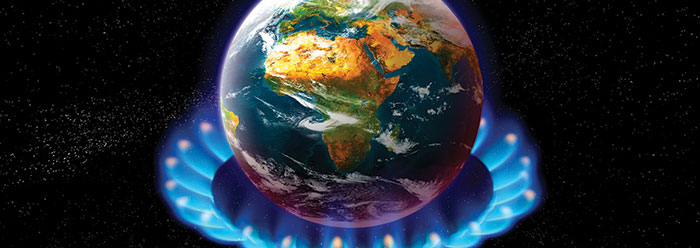
The past two years – the Gaza War, Trump’s authoritarian policies – have unfortunately diverted our attention from humanity’s greatest crisis. Climate change is the real hot topic (pun intended), especially because it isn’t only yesterday’s and today’s news; tomorrow’s news will be worse.
However, humanity has been through climate devastation before. Surprisingly, we can get a clear (albeit indirect) picture from a surprising source: the Bible! As the Torah cycle started anew this past Shabbat, it is worth looking at some of the main events in the Book of Genesis from the perspective of climate change.
I am not suggesting that all the details of each story are actually true. Maimonides (the RAMBAM) noted that many biblical stories are to be understood as metaphors. For instance, each “Day” of Creation should be understood as an “eon” of unknown actual length. On the other hand, the Bible is not a confabulation: each story is an “echo” of true historical events or trends in the distant past. In the case of the Book of Genesis, those “trends” had to do with extreme fluctuations in climate. Here are three such examples, each with a contemporary lesson.
1) A significant increase in sea levels occurred when the Ice Age ended around 15,000 years ago, leading to the vast icebergs that had covered most of the world melting (a process that took a few thousand years). This forced people living along coastal waters (where fish were so plentiful that fishing was hardly “work”) to move very large distances inland, far away from their homes – eventually having to work harder for their sustenance through hunting and gathering.
Does this sound vaguely familiar? The Genesis story of Adam & Eve’s expulsion from the Garden of Eden (a narrative quite similar in broad outlines to other civilizations from that early period) is a reflection of that traumatic time of exile from their “Edenic” state of life, now having to work by “the sweat of their brow,” as Genesis puts it. Indeed, the two new types of work are right there in Genesis as well: Cain’s agriculture and Abel’s herding.
2) Severe climate fluctuations occurred between 3600 and 2800 BCE. with droughts and floods, leading to the development of large irrigation and drainage systems. Nevertheless, even these couldn’t contain the waters when around 2900 B.C.E. the Middle East suffered massive inundation with extreme flooding. This was probably the basis of the Noah’s Ark story found first in a Sumerian legend, then in a Babylonian account called the Epic of Gilgamesh, and finally in the Genesis version that we all grew up with.
3) During the entire century starting around 2200 BCE, severe drought seems to have caused the collapse of Egypt’s Old Kingdom (as well as the Akkadian Empire in Mesopotamia). We do not know who survived this (and how), but it might well have been the basis for the narrative of Viceroy Joseph saving Egypt from “seven years of famine.” Indeed, for Egyptians such an elevation of a foreigner to become the right-hand man of Pharaoh was highly unusual for that xenophobic civilization. However, the entire story provides a clue: there was a severe drought in Canaan as well (Jacob had to send his sons to Egypt for food), so that Joseph as a youngster in Canaan might have understood the signs for an upcoming drought in Egypt as well i.e., able to “interpret” Pharaoh’s dreams.
Of course, climate change continued to impact human civilization for thousands of years thereafter. One specific climate disaster in the late Middle Ages might even have changed the course of Jewish history. A short Ice Age in China from 1315–1317 led to the “Great Famine” and somewhat later in 1332 to massive floods that drowned more than 7 million people along the Yellow River. In fact, so many Chinese died that in many places no one was left to bury the bodies. This enabled the rat population to soar, and they carried the fleas that harbored the bubonic plague.
That Black Death eventually reached Europe in 1348-51, decimating the continent’s inhabitants – between a third to a half of the entire continent’s population perished. As a result, the Catholic Church lost tremendous support, doubly: first in huge membership decimation, and second because “prayer” didn’t help to save entire families and parishes, leading to a decline in religious belief.
As a result, anti-Semitism in Europe increased significantly during the second half of that century – in part to shore up support for Catholicism by scapegoating the Jews for causing the plague (indeed, Jewish death rates were lower – due to far better hygiene habits e.g., washing hands before each meal etc.). The Jews were first slaughtered in Toledo, Spain, in 1355. In Burgos, Jews were saddled with huge taxes and those who couldn’t pay were enslaved and sold off in 1366. Twenty-five years later, hundreds of Jews were murdered in Seville, their houses ransacked, and their synagogues converted into churches. And in the next century, matters only got worse for the Jews.
So if you don’t think that climate change on the other side of the globe doesn’t affect you – think again!
Are we living through the same sort of climate disasters today? Significant climate change – yes; same sort – no. The difference is that those earlier disasters were all “natural” (i.e., caused by Nature), whereas our climate change is anthropic – caused almost exclusively by humanity. The stories in Genesis, therefore, provide us with an important message: climate change almost always has severe negative consequences, but in the far past such disasters couldn’t be avoided. However, if we disregard the problem today then we are doubly guilty: for causing it, and for ignoring what we’re doing to bring it about.
We can certainly use more Josephs today in leadership positions….