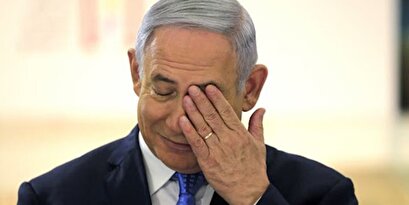

Prof. Sam Lehman-Wilzig: Bibi: For the New Year, Try Saying “I’m Sorry” (for your own good!)
With the Jewish New Year (Rosh Hashana) right around the corner, devout Jews are now saying “Slikhot” (Repentance) to clear their conscience and start the new annum with self-reflection leading to better behavior.
The original purpose of “Slikhot” is communion between wo/man and God; but it is just as useful regarding the relationship between national leaders and their public. As a matter of fact, research shows that politicians who admit to an occasional mistake (whether it be personal or policy) actually improve their standing with the citizenry! Unfortunately, Israel’s present leaders (especially Prime Minister Netanyahu) either aren’t aware of the benefits of such a mea culpa or are psychologically incapable of publicly admitting to human error.
Elected leaders are clearly not intellectually inferior to the general population; everyone makes mistakes. Rather, their problem lies in the job they have undertaken. Within the complex arena of governance, politicians have to make decisions in uncertain situations, not to mention the huge pressures brought by countervailing political forces. Given such complexity, some decisions will naturally lead to unforeseen, negative results. When that happens, should they admit to their mistake and publicly apologize? The answer is a resounding yes, based not only on moral responsibility but also (and for many politicians, especially) personal-political advantage.
From an ethical-moral standpoint, democratic leadership demands accountability. Politicians are entrusted by the public to make decisions that affect individual lives and entire countries’ welfare. When a policy fails, the public expects their leaders to recognize and admit the mistake. An unequivocal (notice the “vocal” in that word) apology acknowledges that they are just as fallible as the average person.
But wouldn’t that erode trust in their judgment? Quite the opposite. When leaders refuse to admit mistakes, they undermine their own credibility because the public is then less likely to accept future decisions. In other words, politicians’ popularity goes down when citizens perceive their leaders as indifferent to their own actions’ consequences, or worse, that they’re incapable of self-reflection. Therefore, a well-timed and genuine apology will humanize powerful leaders, repositioning them as public servants with empathy and self-awareness rather than being unaccountably aloof.
As paradoxical as this might sound, a public apology is not a sign of weakness but rather of strength. Admitting to a mistake displays confidence in the leader’s own integrity, not to mention intellectual honesty and political resilience. Indeed, such contrition enables leaders to reset their relationship with the public, demonstrating an ability to respond to criticism and being open to change. In turn, that leads to greater trust among constituents: former supporters and even some who voted for opposing candidates. In short, voters are more forgiving when a leader takes responsibility instead of deflecting blame.
This isn’t only a matter of the relationship between governor and governed. The impact also extends to all public servants within the government’s bureaucracy, signaling to subordinates within the Administration that they can speak up about potential downsides of the leader’s policy because s/he will listen carefully to such advice.
Sound familiar? Last week’s Israel attack debacle on Hamas leaders in Doha is the most recent case in point. According to widespread, trustworthy reports, PM Netanyahu decided to go ahead with the attack despite the warnings of most of his national security leadership. Thereafter, not only hasn’t he made any public apology, but the opposite occurred: he publicly claimed that the attack was “successful” because it “sent a message”! This, despite seriously angering Israel’s Abraham Accords neighbors, not to mention European countries and much of the rest of the world. But then again, what can one expect from a prime minister who even refuses to allow an official Commission of Inquiry to investigate those responsible for the October 7th disaster?
Compare this to a similar situation over 60 years ago. When U.S. President John F. Kennedy took public responsibility for the failed Bay of Pigs invasion in Cuba, his approval ratings actually rose (!), despite the disaster. In contrast, ten years later President Nixon tried to obfuscate and deny responsibility for the Watergate break-in, irreparably damaging his reputation and ultimately cutting short his presidency.
To be sure, not every apology is effective. It depends on timing (it should be undertaken as quickly as possible), its tone (has to be sincere), and the content (full factual disclosure with no “ifs, ands, or buts”). A perfunctory or conditional apology can have the opposite effect: inflaming an already angry public.
The bottom line: occasionally, politicians need to say “I’m sorry” when they make a serious policy error – as a moral duty and even a strategic asset. Failing to do so is usually counterproductive in the long term for their own political career because it makes (and fakes) the leader into thinking that s/he is infallible – thereby leading to more mistakes, given that no one within the Administration would be willing to show the emperor ahead of time that their proposed policy has no clothes.
Today, when cynicism and polarization threaten democratic institutions, admitting fault is not a weakness but an all-too-rare, necessary strength – one that Israel’s present prime minister sorely lacks. This is the time for Bibi to do some “slikhot,” public apologizing – for his own good, and especially for the benefit of the country.