
Jonathan Sacks: Letting go of HATE!
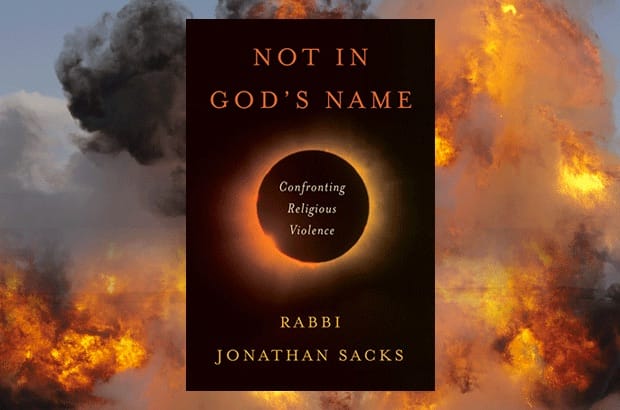
Taken from the book, “Not in God’s Name” by Rabbi Jonathan Sacks z”l.
Darkness cannot drive out darkness: only light can do that. Hate multiplies hate, violence multiplies violence, and toughness multiplies toughness. Martin Luther King
I imagine one of the reasons people cling to their hates so stubbornly is because they sense, once hate is gone, they will be forced to deal with pain. James Arthur Baldwin
To be free, you have to let go of hate.
There is an extraordinary moment in the Hebrew Bible, a passage so brief that you hardly notice it, but it may contain the truth most important for the twenty-first century. Here is the scene. Moses has spent forty years leading the Israelites. He has taken them out of slavery in Egypt, through the sea, across the desert and to the brink of the Promised Land. He has been told by God that he will not be allowed to cross the Jordan and enter the land himself. He will die outside, within sight of his destination, but not yet there.
He understands this. It became a principle in Judaism: it is not for you to complete the work but neither are you free to desist from it. When it comes to social transformation, even the greatest cannot live to see the fulfillment of their dreams. For each of us there is a Jordan we will not cross. Once we know this. One thing becomes important above all others. Leave guidance to those who will follow you, for it is they who will continue the work. Be clear. Be focused. Be visionary.
That is what Moses did. The way the Hebrew Bible tells it, he spent the last month of his life addressing the nation in some of the most visionary speeches ever delivered. They exist today as the book of Deuteronomy. This is the book that contains the great command that defines Judaism as a religion of LOVE: ‘You shall love the Lord your God with all your heart, all your soul and all your might (Deut. 6:5).” It contains the most important inter-human command: Love the stranger for you yourselves were strangers in Egypt (Deut. 10:19).” Deuteronomy contains the word “love” more than any other of the Mosaic books.
That is not surprising, Moses had spoken about love before, most famously in the command, “Love your neighbour as yourself” (Lev. 19:18). Abrahamic monotheism was the first moral system to be based not just on justice and reciprocity – do for others what you would like them to do for you – but on love. What is really unexpected is what he says about hate:
Do not hate an Egyptian, because you were a stranger in his land. (Deut. 23:7)
Because to be free, you have to let go of hate. That is what Moses was saying. If the Israelites continued to hate their erstwhile enemies, Moses would have succeeded in taking the Israelites out of Egypt, but he would have failed to take Egypt out of the Israelites. Mentally, they would still be there, slaves to the past, prisoners of their memories. They would still be in chains, not of metal but of the mind. And chains of the mind are sometimes the worst of all.
“To be free, you have to let go of hate.” Rabbi Lord Sacks speaks on North Africa & the Middle East