
Steve Kramer: Extending Sovereignty – Not Annexation
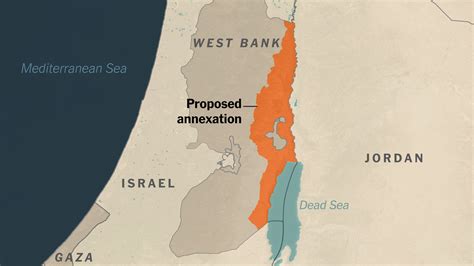
Is the Israeli government “annexing” land in the “West Bank”? Or is Israel just extending its sovereignty to parts of Judea and Samaria? What’s the difference between annexation and sovereignty? Annexing implies something is being taken from an established territory belonging to someone else. Sovereignty means extending authority over a region.
Jews are the indigenous people of Israel. The Jews’ property rights extend far back into history, to the time of Abraham, approximately 2,000 BCE. In 1,000 BCE, King David united the twelve tribes of Israel in a monarchy. This was the first of three Jewish monarchies in the Land of Israel; the last one was during the Hasmonean period, which eventually succumbed to Rome in 70 CE. Jews had lost sovereignty, but many remained in the land, among a motley number of other nationalities.
Arabs only became prominent in Israel with the death of Mohammed and the rise of Islam in 633 CE, when Muslim armies from Arabia marched eastward to defeat and convert people to Mohammed’s new religion. When the Arabs, and later the Ottoman Turk,s controlled Palestine until 1917, Jerusalem was an unimportant, underpopulated backwater. Jerusalem wasn’t revered as Muslim’s third holy place… yet. That changed in tandem with increased Jewish development of Jerusalem, which the Arabs did their best to suppress. Jews regained their status as the majority of Jerusalem’s population by the mid-19th century. Concurrent with the rise of Jews in Jerusalem was the increase in Jerusalem’s “importance” to the Muslims, who cannot abide Jews gaining power in the Middle East.
In the early 1920s, the League of Nations granted to Britain the Mandate for Palestine, which included designating land for “the establishment in Palestine of a national home for the Jewish people.” The Mandate was meant for Britain to expedite a solution between the Arabs and Jews living within “Palestine”. By 1939, when Britain issued a “White Paper” limiting immigration to Palestine by European Jews fleeing Nazi rule, it was clear that there was little left of Britain’s former philo-Semitism, which had reached its zenith during WW1, partially because of scientist (later President of Israel) Chaim Weizmann’s important contributions to the British war effort.
Following the end of WWII in 1946, Britain dashed Jewish hopes of a large grant of territory by awarding the Hashemite clan authority over 78% of Palestine. (This was compensation for their defeat by the Saud clan, which had usurped power from them over Mecca, Medina, and the surrounding areas – Saudi Arabia.) Thus, the great majority of the land in which a Jewish national home was to be established became Transjordan, later renamed the country of Jordan. That decision reduced the land available for a Jewish national home to a mere 22% of the total Mandate territory.
In 1947, following the UN Partition Plan for Palestine, an unofficial war continued between Jews and Arabs in the remaining land. Britain proposed a partition of the land between Jews and Arabs; Israel accepted a small portion of the 22% of land remaining in Palestine, while the Arabs refused, demanding all of the remaining territory. (David Ben-Gurion believed it best to accept this small portion and increase it later.) Israel declared its sovereignty over the land, which remained and war broke out in earnest. On Israel’s Independence Day, May 14, 1948, five Arab armies invaded Palestine to “throw the Jews into the Sea”. But somewhat miraculously, Israel prevailed over its enemies and eventually established itself as the predominant power in the area. At this point, the Arabs in Palestine, gathered from North Africa and Arabia, were deemed “Palestinians”. Ironically, during the Mandate Period, Jews were called “Palestinian Jews” while Arabs eschewed the “Palestinian Arab” designation. Beginning in 1964 the term “Palestinians” came into use to describe the Arabs living there. That was a result of the founding of the (PLO) Palestine Liberation Organization at that time.
Unfortunately, the 1948-9 war ended with Jordan controlling Jerusalem’s Old City as well as the Biblical heartland of Judea and Samaria, which Jordan’s King Abdullah I renamed the “West Bank” in 1950, successfully diminishing recognition of the Jewish lands of Judea and Samaria. In 1967, Israel again repelled a concerted effort by its surrounding Arab neighbors to destroy it, pushing Jordan out of Judea and Samaria and all of Jerusalem, including the Old City. The Israeli government never declared sovereignty over this vital region, which happens to be the birthplace of the Jewish nation!
Now, Israel is extending sovereignty to some parts of Judea and Samaria where Jewish communities are built, or will be built. It was reported on July 23, 2024: “The Knesset affirms that the State of Israel has a natural, historical, and legal right to the entirety of the Land of Israel – the ancestral homeland of the Jewish people. The Knesset calls upon the cabinet of Israel to act promptly to extend Israeli sovereignty, including law, jurisdiction, and administration, over all areas of Jewish communities, in all its forms, in Judea, Samaria, and the Jordan Valley. This action will strengthen the State of Israel and its security, and will safeguard the fundamental right of the Jewish people to peace and security in their homeland.” Energy Minister Eli Cohen told Israel’s Army Radio that Israel’s actions implement “de facto sovereignty” in Israel’s homeland.
The Palestinian Arabs already have their state (there are 22 Arab states). It’s called Jordan, which takes up 78% of the Mandate for Palestine land. It is misnamed “Jordan”, but it really should be called “Palestine” because three-quarters of its inhabitants are Palestinian Arabs. There’s plenty of room in Jordan for Palestinian Arabs from Gaza or the Palestinian Authority area to join their brothers in Jordan. They might then change its name to Palestine.
I believe that Israel has the inherent right to rule in Judea and Samaria. However, this is tempered by the fact that about 3.3 million Arabs live there. Because of that, I don’t expect this “de facto” sovereignty to extend throughout all the Land of Israel. But it would be enough if it prevents a second (or third if you include Gaza) Palestinian state from existing in the Jewish homeland.