
Susan Eisenstein: The Israel Guide Dog Center For The Blind
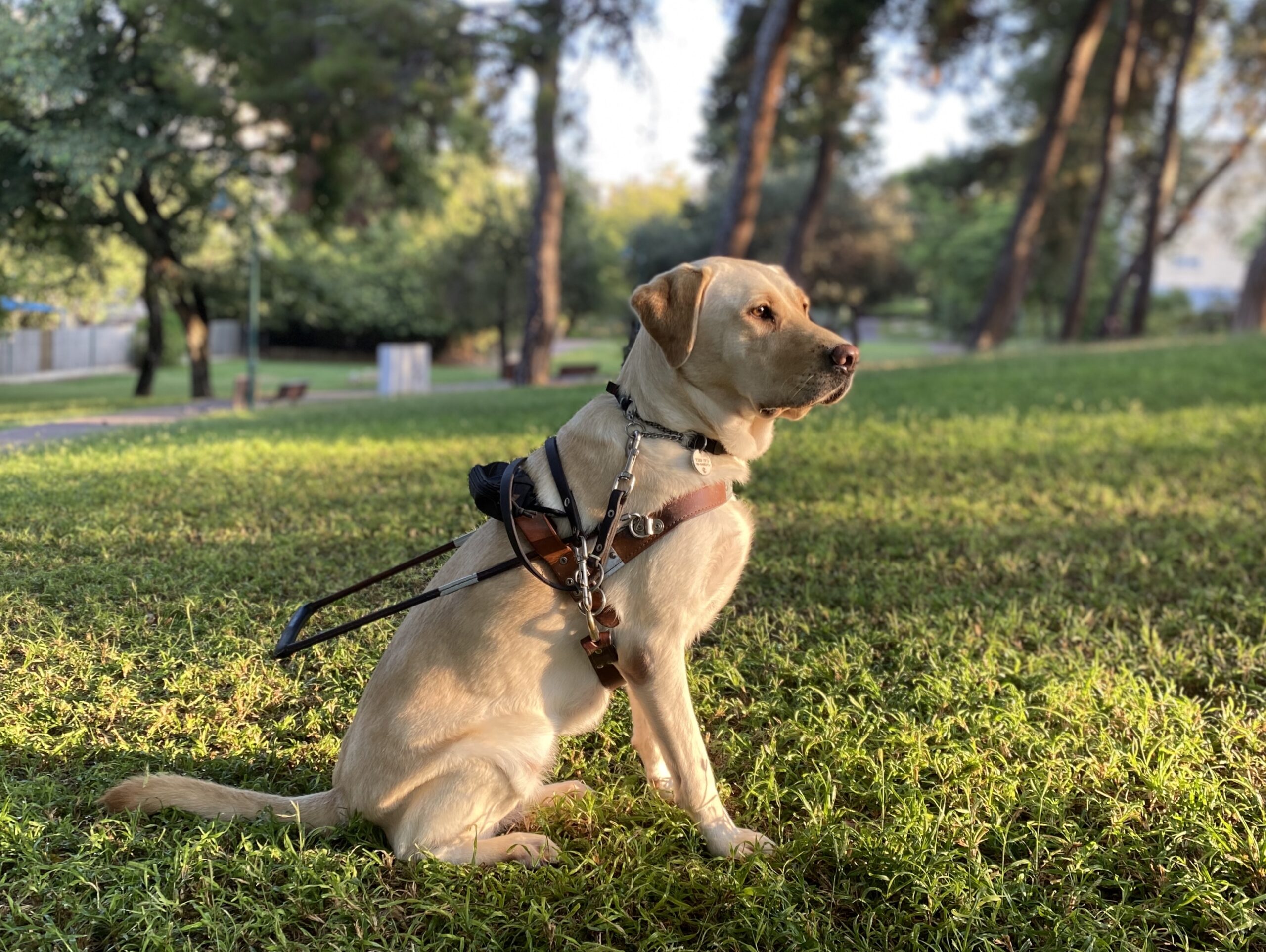
In Beit Oved, Israel, 20 minutes south of Tel Aviv, at the Israel Guide Dog Center for the Blind (IGDCB), puppies are born, nurtured, raised and trained to become very special members of Israeli society. These puppies will grow up to have careers either as guide dogs helping the visually impaired or blind, emotional support dogs, PTSD service dogs, breeders, or ambassador dogs. All of the dogs are born in Israel and of course, the Israel Guide Dog Center for the Blind specially trains all of their dogs to understand Hebrew so that they will be able to meet Israel’s rigorous and challenging environment.
The Israel Guide Dog Center for the Blind was founded in 1991 on the dream of Noach Braun, a former IDF paratrooper and lifelong animal lover who trained dogs in the military. After discovering Israel had no Guide Dog school for its approximately 24,000 blind people, Noach committed himself to establishing one so blind and visually impaired Israelis could gain independence, mobility, and companionship. Until the Center opened in 1991, in order to get a Guide Dog, visually impaired Israelis had to be proficient in English, pass a government test, and travel to either the US or the UK for a dog. Those dogs were trained in English and not accustomed to the unique conditions in Israel. Also, essential follow-up care by staff was not possible overseas. So Noach Braun was determined to create what is now the Israel Guide Dog Center for the Blind.
With the support of his wife, Orna, and key partners—most notably Norman Leventhal—Noach trained in the US and UK and became a certified guide dog mobility instructor. In 1991, the IGDCB opened in a rented home, training its first dogs and clients. The Center later moved to Beit Oved, expanded its facilities, and became Israel’s only internationally accredited Guide Dog school. Today, the Center has created hundreds of life-changing partnerships.
hodaya-mor-with-lacey-GD1May-Course-Campus
Gail Androphy, Executive Director, explained how the dogs at the Center are chosen for their roles and what training for the different roles entail. “After leaving the Center at 8 weeks,” she said, “our dogs go to Israeli volunteer puppy raisers until they are approximately 14-16 months old. They must fill out a written application and then complete the full application process. Most of our puppy raisers are Israeli university students. Our puppy raisers live in various areas throughout Israel and are responsible for teaching the puppies to respond to Hebrew commands and to learn a new lesson every month. For example, the puppies always walk on the left on a short leash, they never jump on the furniture, and they only take food from their handler. Another important lesson is being able to train the puppy to relieve itself on command! The puppy raiser will be responsible for caring for and loving the puppy for approximately 10-12 months, before returning the puppy to the Center for evaluation.”
“At that point they come back to the Center to be assessed,” Androphy continued. “This assessment is a multi-day process where we look at each dog’s health, temperament, agility, strength, and willingness to follow directions. The outcome of this assessment determines the dog’s “career path.”
“Guide Dogs: Dogs selected for guide dog training learn the important skills necessary for leading a visually impaired or blind person past the obstacles of daily life. Training takes approximately four to five months, plus an additional month of training with a partner specially selected for them. The dogs are retired at approximately the age of ten.
“Service Dogs: Dogs selected to continue training for people with post- traumatic stress disorder learn the skills they need to disrupt nightmares, soothe panic attacks, and give their partners a sense of security. The training period takes approximately two months. The dogs are retired at the age of ten.”
“Emotional Support Dogs: These excellent dogs have already undergone extensive obedience training during the past year and are placed with families with special needs — primarily families with children on the autism spectrum or children with vision impairment. The dogs remain with the family for life.”
“Breeders: The best of the best are selected to enter our breeding department. These dogs live in the homes of our volunteer foster families until they whelp their litter at the Puppy Development Center. Our female dogs are retired after giving birth to three or four litters.”
“Ambassadors Dogs: These wonderful dogs have a lot of love and joy to give and make great companions. They are placed with loving families and help raise the visibility of our program.”
Visitors to IGDCB can also arrange to take a tour of the Center. “A visit to the Israel Guide Dog Center is unlike anything you’ve ever seen in Israel. Over the span of 90 minutes, you’ll learn about the process of creating our life changing dogs, get a walking tour of the facilities, see many dogs—some puppies, others in training, and maybe even some being placed with Israelis in need. However, as a working Guide Dog school, not all of our dogs can be played with—in particular, everyone wants to snuggle our puppies. This is not possible as we don’t want to introduce germs to their young bodies,” said Gail Androphy.
And Ms. Androphy told Israel Seen what makes her role at the Center so satisfying and positive each and every day. “There are so many things that I like about working with the Israel Guide Dog Center. First and foremost, I feel like we are a family who knows our clients, our dogs, and the worldwide team of professionals, volunteers, and donors who help sustain the Center’s work. And I love how the impact of our work is felt on so many levels throughout Israel.
- We give independence to blind Israelis, provide stability for IDF veterans suffering from PTSD, and comfort children and adults with emotional needs.
- We support families by restoring a sense of normalcy as loved ones regain independence and confidence.
- We increase inclusion and encourage accessibility by creating moments of connection with our dogs that build more compassionate communities,
- And we create lasting change by harnessing the joy and connection our dogs inspire into impact. As ambassadors, they help the Center advocate for clients’ rights, public education, cross-sector collaboration, and government policy guidance in Israel.”
Ms. Androphy also revealed exciting future plans for IGDCB. “The Center has launched an ambitious 5-year growth forecast with the goal of significantly increasing the number of partnerships we provide by 2029. This will require the Center to scale up every element of its work—the number of puppies born, the number of volunteer puppy raisers, increasing our physical space, expanding our team of staff members (trainers, veterinarians, administration, etc.), and raising more funds.”
For more information: http://www.israelguidedog.org
or write to: Israel Guide Dog Center for the Blind at info@israelguidedog.org