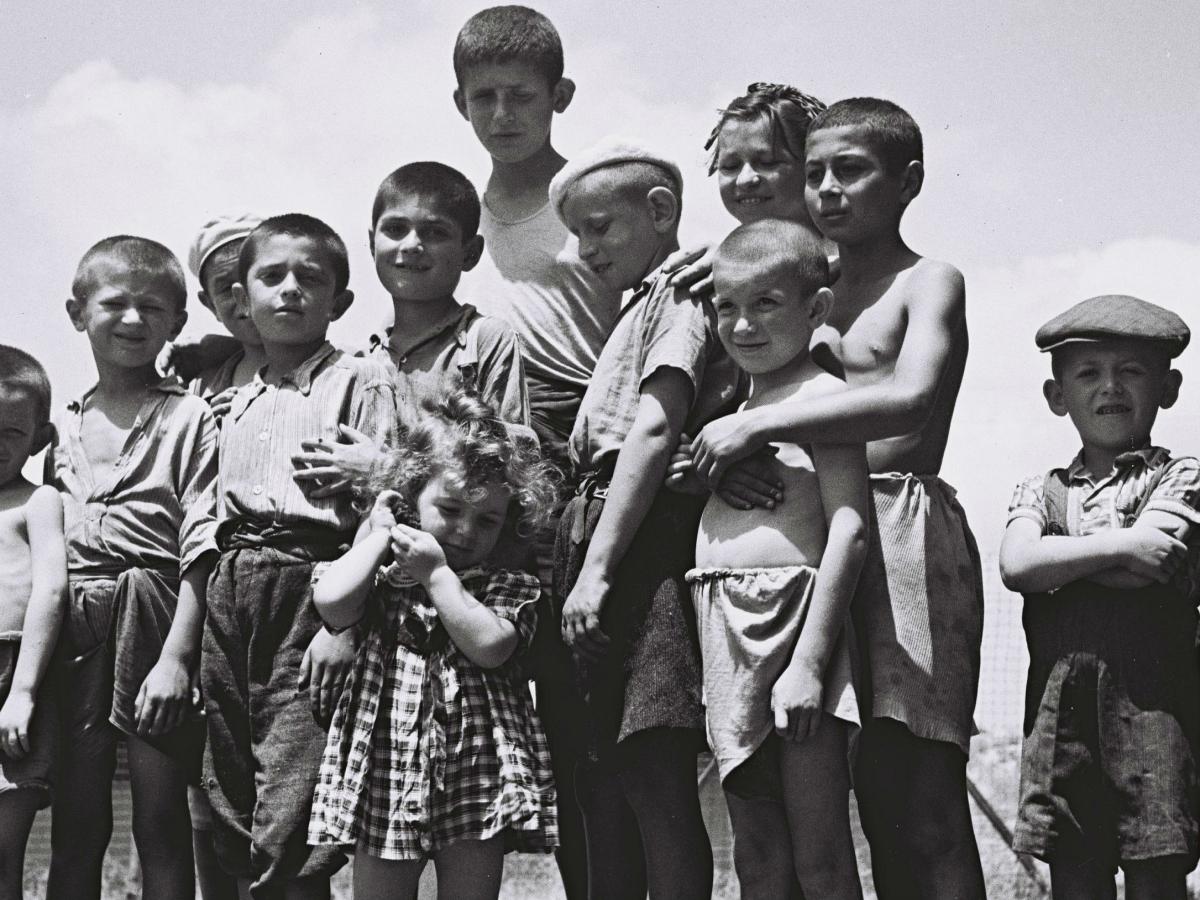

Child Survivors and Holocaust Memory
Prof. Sam Lehman-Wilzig: The Silent Oct. 7 Disaster: Epigenetics
“War is hell.” But it turns out, not only for soldiers and civilian casualties. Psychologists around the world have come to a greater understanding of the traumatic effects of war due to “epigenetics.”
What’s that? Until the mid-20th century, it was believed that the genes a person was born with basically determined who they were and how they would behave: character, height, personality, health etc. However, more recent scientific research – in biology, psychology, genetics, medicine – has begun to show that an individual’s environment can also significantly affect the person, even at the most basic level by changing how genes are “expressed.”
The process is fascinating: geneticists have known for a long time that our long strands of genes have a lot of “junk” without any seeming function. However, it now known that these are dormant until something “wakes them up” (and also puts formerly working genes to “sleep”) – and at that point the blend of genes “working” on us is different than the ones functioning when we were born, for better or for worse (depending on the environmental stimulus).
Which leads to the next question: is this “new combination” of gene expression carried down to the next generation? The answer, unfortunately, is now clear: a resounding yes!
When can this happen? Not so much after a person is born (more in a moment about that “not so much” i.e., sometimes), but rather during pregnancy. Simply put, if a pregnant woman undergoes severe trauma (physical or psychological), the chances are high that her child will carry that trauma through their own lives as well – and even the eventual grandchild will suffer!! How can this be? The fetus inside such a mother is already developing germ cells (the ones involved in conceiving their own future child), so that the third generation is impacted as well.
The first indication of this was the generation that went through the Dutch famine. In 1944, when the Nazis conquered Holland during WW2, they basically starved the local population. We now have strong evidence that those women’s children (whether in the womb at the time, or already alive as young kids) suffered throughout their lives from higher levels of LDL (bad) cholesterol as well as higher rates of obesity, diabetes, and even schizophrenia – altogether leading to a 10% higher death rate (https://www.nytimes.com/2018/01/31/science/dutch-famine-genes.html).
Moreover, it turns out that traumatic epigenetic changes can even manifest themselves down the male line. A remarkable recent study (https://www.ncbi.nlm.nih.gov/pmc/articles/PMC10593129/) found that “male line grandsons descended from grandfathers who experienced a harsh captivity [during America’s 19th century Civil War] faced a 22–28% greater risk of dying every year after age 45 relative to grandsons descended from non-POWs.”
And now the newest and best-control study has emerged – of all places, from the Syrian civil war (https://medicalxpress.com/news/2025-02-epigenetic-echoes-violence-genetic-future.html). Its conclusion: “The grandchildren of women who were pregnant during the [1982 Hama Syrian] siege – grandchildren who never experienced such violence themselves – nonetheless bear marks of it in their genomes… the genetic transmission of stress across generations… accelerated epigenetic aging, a type of biological aging that may be associated with susceptibility to age-related diseases.”
The relevance of all this to Israel’s Oct. 7 is clear. The country’s medical and psychological establishment has done yeoman’s work dealing with the trauma of the Hamas barbarities – for soldiers and civilians alike. However, there’s another group that will need serious medical and psychological attention in the coming decades: children born of pregnant mothers who suffered trauma in the Oct. 7 events, and possibly also those young children already alive on Oct. 7, who had to leave their homes with their families for months on end, living (“surviving” would be a more appropriate term) in hotel rooms and other cramped, temporary housing. In short, epigenetic harm also works on people of any age, albeit more strongly among the young who are developing faster.
This will be an added social and economic burden for Israel for decades to come. Indeed, a recent study estimates that “the economic burden of PTSD on Israel could reach around 197 billion shekels ($53.2 billion) over the next five years” (https://www.jpost.com/health-and-wellness/mind-and-spirit/article-812999). However, this doesn’t account for the much longer-term impact of “epigenetically altered children,” as the years go by in the future.
Is there are any good news here? A little. Such intergenerational trauma is a matter of predisposition and is not an “inevitable,” predetermined outcome. This might be the “luck of the draw” or a function of the specific type of trauma – scientists are still trying to figure out the relevant factors. Moreover, we also know that with the right treatment – psychological and/or biological – epigenetic harm can sometimes be reversed. In any case, it is an issue that Israeli policymakers would do well not to try and sweep under the rug due to budgetary cost or ignorance. The economic price in lost productivity, not to mention pure human suffering, is too great to be ignored.
In short, the banal saying that war is hell” now has a wider scope, incorporating future generations – not merely in our collective memory of the war but deep within the cells of our individual body’s very being: our genes and their enveloping epigenetic material.
Postscript: For a highly detailed and somewhat scientifically technical (but still readable) explanation of the “epigenetic trauma” phenomenon, including studies on Holocaust survivor children, see: https://www.scientificamerican.com/article/how-parents-rsquo-trauma-leaves-biological-traces-in-children/